Blog

After their arrival in India, Eliza and her husband settled in Calcutta. It was there that she was living at the Christmas of that year. Eliza detailed her first Christmas in India in a letter to her sister on 27th January 1781.

Emma Jolly, in the article A British Christmas in India 1780

Emma Jolly writer, historian, genealogist
  1. Review: Tracing Your Black Country Ancestors by Michael Pearson

    The Black Country, black by day and red by night, cannot be matched for vast and varied production, by any other space of equal radius on the surface of the globe.” Elihu Burritt, American Consul in Birmingham 1868

    As roughly half my family is from the Black Country, I was very pleased to receive a copy of Tracing Your Black Country Ancestors by Michael Pearson. The latest in Pen and Sword’s Tracing Your . . . series, this book fills a gap in family history bibliography. The Black Country is a relatively small area, but its unique heritage, culture and dialect warrant further attention from historians. The region is geographical rather than administrative, which can prove nightmarish for the family historian with BC ancestors. We have to move around between four archives, three counties and four metropolitan boroughs, encompassing Wednesbury, Darlaston, Wednesfield, Bilston, Coseley, Tipton, Dudley, Brierley Hill, Halesowen. West Bromwich, Olbury and Smethwick. It must be noted, though, that the Black Country never includes Birmingham. Furthermore, the BC is within, but does not fully cover, the counties of Staffordshire, Worcestershire and Warwickshire. Confused? Thankfully, this new book benefits from a clear layout, with its chapter on archives and resources, and a detailed appendix on local government providing a comprehensive overview for researchers.

    Although Black Country people know where they’re from, as Pearson notes, there are no “officially defined borders” of the region, with its four archives lying in the boroughs of Dudley, Sandwell, Walsall and Wolverhampton. The origins of its name lie in the rich black coal seam of its lands. The book dedicates a full chapter to mining, including a useful list of mines in the region, clearly tabulated. In fact, the use of tables and charts throughout is one of the reasons for the book’s clarity. Other helpful details in this chapter are the definitions of jobs such as hewer, butty and bellman, and the dates of local mining accidents.

    edward-billingham-1930s

    My great grandfather, Edward Billingham (1874-1950), worked as a miner and lived in Coseley.

    The Black Country is renowned for its contribution to the Industrial Revolution. Pearson observes that “the wealth generated by industry meant people did not leave the region to work elsewhere”. My family lived in the area for centuries. Like many of them, most Black Country inhabitants worked in industrial jobs. My ancestors worked as miners, steel workers, iron puddlers, nail makers, hand loom weavers and brick makers. All of these areas are covered in detail, with the chapters on iron and steel, and industrial diversity. The latter is particularly useful, with details like the 21 out of 43 brickworks in the region being in Sedgley/Kingswinford. As my brick-making ancestors were women, I’m pleased that Pearson recognizes women’s contribution to the industrial revolution and to the growth and culture of the Black Country. He reveals, for example, that in 1883, 16,000 of the 20,000 area’s nail makers were women.
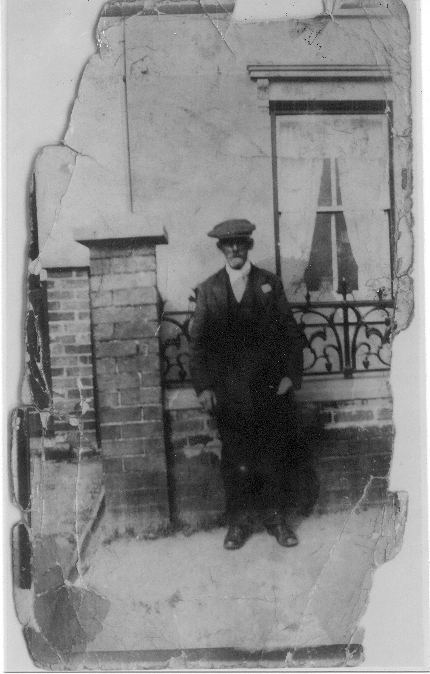
    1-noah-hingley-at-earl-st-wallbrook-home

    My great great grandfather, Noah Hingley (1848-1926), lived in Coseley and worked as an iron puddler.

    Other chapters examine transport, BC off-duty (an assessment of leisure, shops and so on), religion (non-conformism was very popular in the region) and Black Country life. This last chapter covers the remarkable local dialect. I have a particular interest in this as my great uncle Harry Harrison wrote fluently in the dialect, and kept the words and humour alive in regular talks and performances. He was one of the founders of the Black Country Nite Out Show. I can remember as a child finding one of his poetry books on my grandparents’ shelves. I couldn’t understand a word! Thankfully, Pearson provides a guide to some of the most commonly heard words and expressions. Some of them, like “yo’m” (“you’re”), recall the way my grandfather used to speak. To try and get an ear for the dialect, say aloud this line from my great uncle, still proudly displayed on the website of a Droitwich butcher, “Dunn’s mate is really great!”

    As a retired West Midlands Police Inspector, Michael Pearson is unsurprisingly strong in the Crime & Punishment chapter. Despite his non-genealogy background, Pearson’s extensive knowledge of the area is evident. He demonstrates personal insight and local knowledge throughout, from local foods like faggots and “greay pays” (maple peas simmered with bacon and served with bread) to the BC sense of identity (“those born and bred here . . .still see themselves as coming from their village”).

    The book is also well-illustrated, not least by the many images of the Black Country Living Museum, near Dudley, a must-visit for those with ancestors from the region. This open air museum, which opened thirty-four years ago, is spread over a twenty-six acre site with over sixty separate exhibits, such as a chainmaker’s forge and a school. All the historic buildings in the ‘living’ village have been moved brick by brick to be rebuilt exactly as they once stood.

    Racecourse Colliery at the Black Country Living Museum
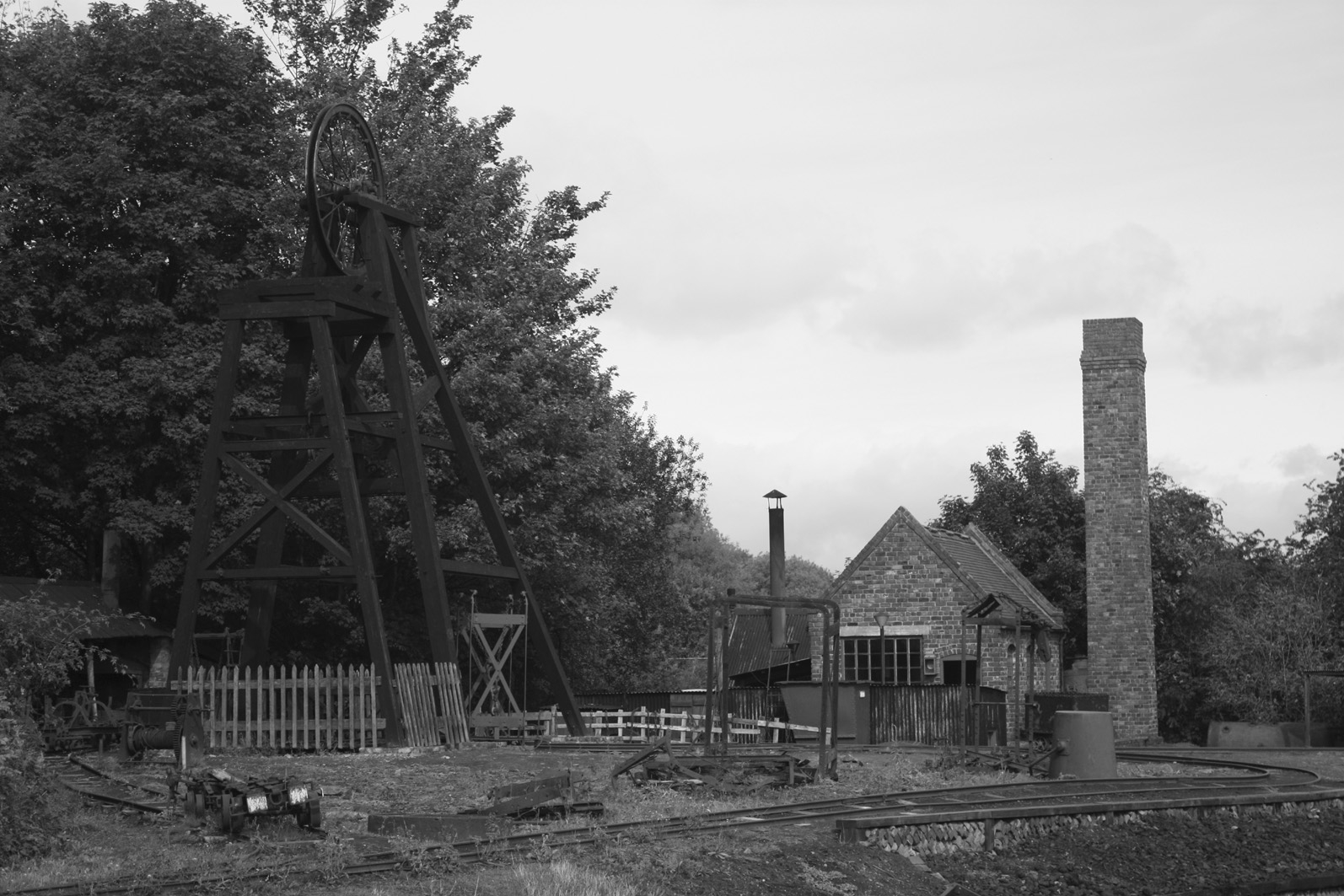
    racecourse-colliery-at-the-black-country-living-museum

    Summary: this is a book that cannot fail to aid those researching ancestors from the Black Country.

  2. Historic Newspapers

    Anyone who has spent hours poring over fragile, yellowing sheets in local archives or at Colindale knows how engrossing old newspapers can be. The popularity of the British Newspaper Archive, which recently celebrated its first year online, proves how keen many of us are to explore the past through the contemporary press. For family historians, enjoyment comes not just from seeing our ancestors’ names in print or learning about the worlds they inhabited, but in reading the very words they read. Depending on the nature of the publication, this can give us insight into popular opinion or into the mind of the establishment.

    Much as I enjoy using online newspaper databases, which I do at least once a week, I was delighted to receive a couple of old newspapers from Historic Newspapers at http://www.historic-newspapers.co.uk/

    The pleasures of holding a full-size paper, feeling the thickness of the pages, and being able to judge just how tightly my ancestors had to squint to read the fine details of Mr. William Shadforth’s “Special” Heart and Nerve Tonic are rare, and something I miss in the digital experience.

    Although companies like Historic Newspapers market their papers for special occasions, such as anniversaries or significant birthdays, the possibility of choosing a specific title from a specific date can be useful for family historians. I have collections from local archives of photocopied newspaper columns featuring my ancestors: my great grandmother’s obituary in The Stage, the inquest into my great great grandfather’s death, and more recent cuttings of the achievements of close family members.

    Sometimes I’d like to keep the entire newspaper, to see my ancestors’ activities in the context of what was happening around them. This is possible with companies like Historic Newspapers, although it can be more expensive than visiting a local history centre and copying from a microfilm or scanner. Occasionally, the cost may be weighed against the issue that dedicates an entire page to an ancestor’s military bravery or a detailed obituary, and that features a death announcement and a letter on the event elsewhere. Given how easy it is for researchers and library users to find an article in The Times Digital Archive or the Daily Mirror online, it is not surprising that these titles are the most popular with Historic Newspapers’ customers.

    One of the papers I was sent was the Sunday Pictorial of 25 April 1926. With smallish, thick pages and heavily illustrated, this is markedly different from other newspapers of 1926. I chose this particular edition as I was keen to see how contemporary newspapers reported the F.A. Cup victory of Bolton Football Club – captained to a 1-0 victory by my great grandfather’s cousin, Joe Smith. As mentioned in the post on the National Football Museum, my grandmother claimed to have drunk out of the F.A. Cup when she was 15. On the back page of the Sunday Pictorial was a large picture of the Bolton player, David Jack, draining a draught from the very cup. And at the bottom of the page was a smiling Joe Smith, surrounded by helmeted police officers, carrying the cup to the Bolton dressing-room at Wembley Stadium.

    The FA Cup final took place on a Saturday and was reported the following day. Copies of Sunday newspapers are harder to find. Historic Newspapers holds fewer newspapers for Sunday than for the rest of the week, and they are consequently more expensive. There are lesser-known titles among the Sundays, however, like the Sunday Pictorial.

    My favourite article in this issue is titled, “Is Dancing Overdone To-day?” This feature by Clifford K. Wright on the dance craze of the period begins:

    Has dancing to-day become an obsession?

    Do we dance too much? One would

    imagine so from the frequent attacks to which

    this form of enjoyment is subjected.

    When at the conclusion of the Great War

    people welcomed dancing as one of the easiest

    avenues to forgetfulness it was pointed out

    that wars and social cataclysms like the French

    Revolution were frequently followed by some

    similar craze. It was though that this out-

    burst also would prove a mere craze and be

    short-lived. yet in 1926 we find that the cult

    of the dance is pursued by everyone with un-

    abated zest and enthusiasm,

    Wright ends with the defence:

    But most important of all are the mental re-

    actions produced by dancing. It is the ideal

    cure for a fit of the blues. Through it we can

    find an escape from the usual groove of our

    lives into a secret and magical world of our

    own.

    Sources:

    Historic Newspapers has the largest private archive of British newspapers in the world. The archive has been built over many years from various sources: initially from the newspaper group’s original archives as they moved out of Fleet Street in the 80s, and continues today, as virtually all the national Scottish and English newspaper titles send us their daily editions. Papers are also continually being sourced from libraries and other collections from all over the world. The newspapers are stored in leather binding, from which they are carefully removed when sold, and sent out in presentation boxes. The company will sell the last paper for a date, but have scanned leading titles in order that an original archive remains.

    Historic Newspapers is offering readers of this blog an exclusive 15% discount on anything on the site by using the code: 15TODAY.

Latest From Emma's Blog

Book Review and Author Interview: A History of Parish Registers in England and Wales: From the Restoration to Civil Registration by John Wintrip (The Lutterworth Press, 2026)

A History of Parish Registers in England and Wales: From the Restoration to Civil Registration by John Wintrip (The Lutterworth Press, […]

[Read more]

Book Review and Author Interview: Ancestoring: Understanding Records, Family, and Ourselves by Darcie Hind Posz

Ancestoring: Understanding Records, Family, and Ourselves by Darcie Hind Posz (Genealogical Publishing Company, 2026) In 1926, Carl Jung concluded a […]

[Read more]

Member of The Society of Authors Member of The Association of Genealogists and Researchers in Archives Graduate of the Institute of Heraldic and Genealogical Studies Canterbury Member of the Society of Genealogists Pharos Tutors