Blog

After their arrival in India, Eliza and her husband settled in Calcutta. It was there that she was living at the Christmas of that year. Eliza detailed her first Christmas in India in a letter to her sister on 27th January 1781.

Emma Jolly, in the article A British Christmas in India 1780

Emma Jolly writer, historian, genealogist
  1. St Stephen’s Church, Ootacamund

    Recently, I received a fascinating email from a client, Evelyn Nelson, who had followed up on my research by visiting her family’’s former hometowns of Chennai/Madras and Udhagamandalam/Ootacamund.

    Her first stop was Chennai, where she found the family vault of her ancestor, Richard St Leger Mitchell. She also visited churches of event for more recent members of the family, and the location of the school where Richard was master, in the former ‘Black Town’ area of the city. In 1906, this area was formally re-named ‘George Town’.

    To find out more about her mother’s family, Evelyn and five of her cousins then headed for Udhagamandalam, or Ootacamund. This hill station in the Nilgiri Hills, known as Snooty Ooty in the days of the British Raj, was a popular escape from the heat of Madras below. Evelyn visited St Stephen’s Church, where her mother’s was first married. I had been unable to find any records for Evelyn’s family relating to this church in the India Office Records or on Family Search. Evelyn thus took the opportunity of meeting the priest to ask if any records were held at the church itself. Amazingly, the priest replied by inviting Evelyn to visit his house the following day.

    When Evelyn arrived at the priest’s house, she was shown the church register on a shelf in his study. The priest kindly allowed Evelyn to consult the register, in which she was delighted to find not only the marriage record but all the baptism records of her mother’s siblings.

    I am often asked by clients where they should search if they cannot find a record in the British Library or The National Archives, or online at sites such as the FIBIS database, Family Search, Find My Past, Ancestry, or India Office Family History Search. The answer I have to give is, “Contact the church in India.” This is not always possible for some, and not everyone is in a position to visit. However, Evelyn’s experience shows what successes can be made and that with family history, you should never give up!

    evelynnelson.jpg

    As a postscript to this, the memorials inside St Stephen’s Church have been transcribed by Kae Lewis and can be found on the website: http://www.kaelewis.com/database/ooty/searchpage.htm

  2. Review: Tracing Your Black Country Ancestors by Michael Pearson

    The Black Country, black by day and red by night, cannot be matched for vast and varied production, by any other space of equal radius on the surface of the globe.” Elihu Burritt, American Consul in Birmingham 1868

    As roughly half my family is from the Black Country, I was very pleased to receive a copy of Tracing Your Black Country Ancestors by Michael Pearson. The latest in Pen and Sword’s Tracing Your . . . series, this book fills a gap in family history bibliography. The Black Country is a relatively small area, but its unique heritage, culture and dialect warrant further attention from historians. The region is geographical rather than administrative, which can prove nightmarish for the family historian with BC ancestors. We have to move around between four archives, three counties and four metropolitan boroughs, encompassing Wednesbury, Darlaston, Wednesfield, Bilston, Coseley, Tipton, Dudley, Brierley Hill, Halesowen. West Bromwich, Olbury and Smethwick. It must be noted, though, that the Black Country never includes Birmingham. Furthermore, the BC is within, but does not fully cover, the counties of Staffordshire, Worcestershire and Warwickshire. Confused? Thankfully, this new book benefits from a clear layout, with its chapter on archives and resources, and a detailed appendix on local government providing a comprehensive overview for researchers.

    Although Black Country people know where they’re from, as Pearson notes, there are no “officially defined borders” of the region, with its four archives lying in the boroughs of Dudley, Sandwell, Walsall and Wolverhampton. The origins of its name lie in the rich black coal seam of its lands. The book dedicates a full chapter to mining, including a useful list of mines in the region, clearly tabulated. In fact, the use of tables and charts throughout is one of the reasons for the book’s clarity. Other helpful details in this chapter are the definitions of jobs such as hewer, butty and bellman, and the dates of local mining accidents.

    edward-billingham-1930s

    My great grandfather, Edward Billingham (1874-1950), worked as a miner and lived in Coseley.

    The Black Country is renowned for its contribution to the Industrial Revolution. Pearson observes that “the wealth generated by industry meant people did not leave the region to work elsewhere”. My family lived in the area for centuries. Like many of them, most Black Country inhabitants worked in industrial jobs. My ancestors worked as miners, steel workers, iron puddlers, nail makers, hand loom weavers and brick makers. All of these areas are covered in detail, with the chapters on iron and steel, and industrial diversity. The latter is particularly useful, with details like the 21 out of 43 brickworks in the region being in Sedgley/Kingswinford. As my brick-making ancestors were women, I’m pleased that Pearson recognizes women’s contribution to the industrial revolution and to the growth and culture of the Black Country. He reveals, for example, that in 1883, 16,000 of the 20,000 area’s nail makers were women.

    1-noah-hingley-at-earl-st-wallbrook-home

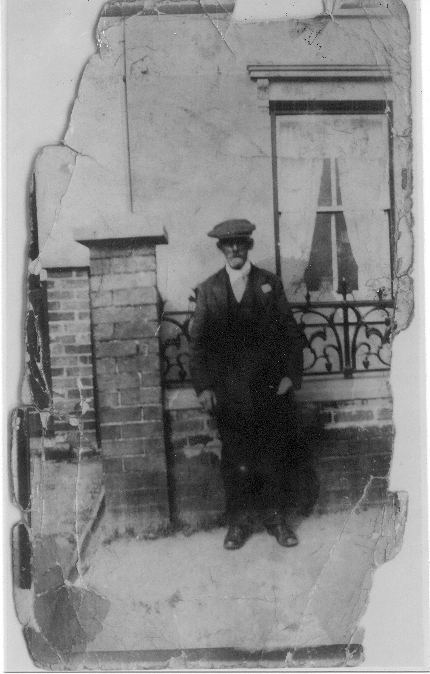
    My great great grandfather, Noah Hingley (1848-1926), lived in Coseley and worked as an iron puddler.

    Other chapters examine transport, BC off-duty (an assessment of leisure, shops and so on), religion (non-conformism was very popular in the region) and Black Country life. This last chapter covers the remarkable local dialect. I have a particular interest in this as my great uncle Harry Harrison wrote fluently in the dialect, and kept the words and humour alive in regular talks and performances. He was one of the founders of the Black Country Nite Out Show. I can remember as a child finding one of his poetry books on my grandparents’ shelves. I couldn’t understand a word! Thankfully, Pearson provides a guide to some of the most commonly heard words and expressions. Some of them, like “yo’m” (“you’re”), recall the way my grandfather used to speak. To try and get an ear for the dialect, say aloud this line from my great uncle, still proudly displayed on the website of a Droitwich butcher, “Dunn’s mate is really great!”

    As a retired West Midlands Police Inspector, Michael Pearson is unsurprisingly strong in the Crime & Punishment chapter. Despite his non-genealogy background, Pearson’s extensive knowledge of the area is evident. He demonstrates personal insight and local knowledge throughout, from local foods like faggots and “greay pays” (maple peas simmered with bacon and served with bread) to the BC sense of identity (“those born and bred here . . .still see themselves as coming from their village”).

    The book is also well-illustrated, not least by the many images of the Black Country Living Museum, near Dudley, a must-visit for those with ancestors from the region. This open air museum, which opened thirty-four years ago, is spread over a twenty-six acre site with over sixty separate exhibits, such as a chainmaker’s forge and a school. All the historic buildings in the ‘living’ village have been moved brick by brick to be rebuilt exactly as they once stood.

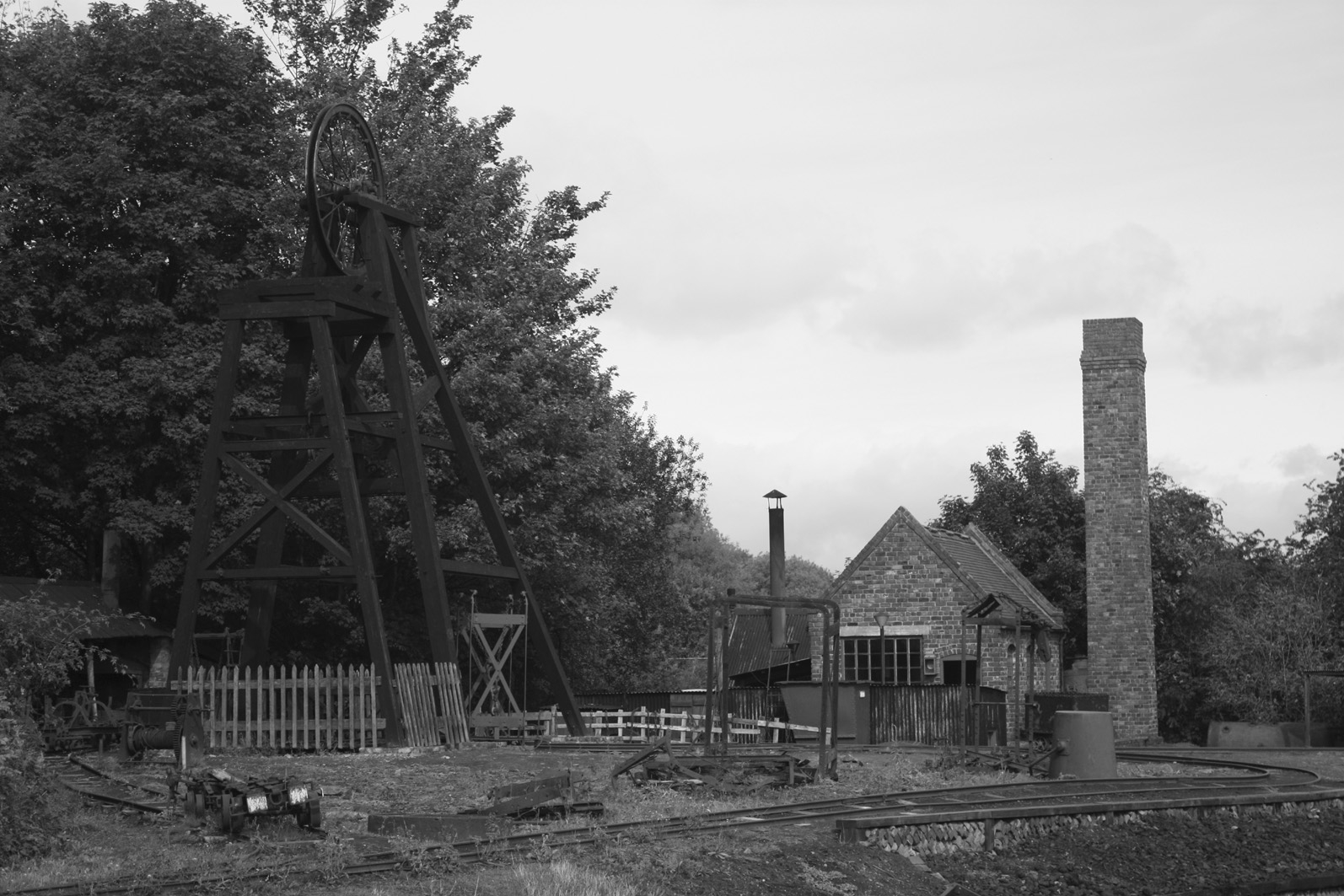
    Racecourse Colliery at the Black Country Living Museum

    racecourse-colliery-at-the-black-country-living-museum

    Summary: this is a book that cannot fail to aid those researching ancestors from the Black Country.

  3. Naming for Empire

    In the course of studying for an MA in Imperialism and Culture, I have been examining how enthusiastic working class Britons were about the Empire in the period 1870-1914. This debate has long exercised historians, such as John Mackenzie, Bernard Porter, and Antoinette Burton.

    Mackenzie, a pioneer of cultural imperialism argues that the working classes were enthusiastic about empire and that they were particularly influenced by propagandist media, such as music hall songs, popular newspapers and juvenile literature. He highlights the adventure stories and heroes of empire, and the fervour with which many working class people greeted them. He quotes Mafeking night, 18 May 1900 (when impromptu parties took place across Britain to celebrate the relief of besieged British forces), as a striking example of this imperialistic passion.

    In contrast, Bernard Porter writes dourly, “For the working classes who participated in Mafeking night the whole occasion was probably little more than a celebration of the safety of their comrades in uniform.”1 Richard Price challenges them both by arguing that the enthusiasm emanated more from the lower middle classes and that this was evident in the voting patterns of the ‘khaki’ election of 1900. The boundary between the upper working classes and the lower middle classes can be difficult to distinguish but at the time of the war in South Africa, four fifths of British society is believed to have been working class.2

    Wherever the balance of the argument falls, there is no denying that a passion amongst the British people for the heroes, military successes and adventures of empire grew hugely up to the turn of the century. In the Second Anglo-Boer War 1899-1902, this enthusiasm reached its peak. And it was in this period that an interest in current affairs spilled over into the naming of children.

    In my Naming Napoleon blogpost, I look at the popularity of the name Napoleon during the nineteenth century and why this was so. In assessing these, I came across siblings or middle names of the Napoleons which indicated an interest in heroes or military adventure. Napoleon’s British foes, such as Horatio, Nelson, Wellington and Wellesley were all in evidence, as were as the names of mythical heroes such as King Arthur. In the 1899-1902 period, names such as Arthur and Horatio, as well as those of Saxon kings, Alfred and Harold, were common.

    By 1898, however, Horatio was becoming associated with another Horatio Herbert: the hero of the Battle of Omdurman in the Sudan, then Lord Kitchener of Khartoum. Although Kitchener preferred to use his middle name, both forenames saw a surge in popularity in the birth registrations3 from this date. From 1900 (as he progressed to Chief of Staff during the Boer War, eventually being appointed Secretary of State for War in 1914), the hero worship of Horatio Herbert continued along with the popularity of his forenames. In 1892, a Horatio Herbert Bryant was registered in Bradford West, with several more following in subsequent years. Even ‘Kitchener’ was used as a forename; first appearing in the GRO birth registrations of December quarter 1898: Kitchener Sladden of West Ashford. There was a marked increase in Kitchener related names in 1902, but no Kitcheners4 were registered between 1905 and September quarter 1914 – the onset of the Great War. The imperial link also seems clear with Horatio Kitchener (Goole, 1898) and Horatio Baden (Hendon, 1900).

    The connection of Kitchener with the then Colonel Baden Powell continues with Kitchener Baden P R Coleman, who was registered in Ipswich in September 1900 (4a, 973). Baby boys with the names Baden, Baden Powell and Baden Mafeking appear regularly in GRO records between 1899 and 1920, when post war socio-cultural values began to turn against overt references to military imperialism. The GRO birth indexes for England and Wales5 show that between 1837 and the beginning of the Siege of Mafeking in October 1899, only ten children were registered with the first name Baden. In contrast, from the December quarter 1899 and the outbreak of war in 1914 there are hundreds of Badens, several of whom were given the middle names Powell or Mafeking to emphasize homage to the hero of the siege.

    Checking some of these Badens on the 1911 census6 shows many of them were from working class families, with fathers who were miners, labourers and factory workers. There is a sense that by making a lasting public statement of their enthusiasm for Baden Powell, and possibly support for his military and imperial activities, that the parents of these children wanted to show the wider world that they were part of the empire-supporting community.

    Besides Kitchener and Baden-Powell, other heroes celebrated through babies’ names include Field Marshal Fredrick Sleigh Roberts (1832-1914), commander of the field army in the Boer Wars, who was nicknamed “Bobs”. Kitchener Bobs Thornton in Headington (1902), Bobs Baden P Ellis from St Saviour (Sep 1900) and Bobs Baden Jones of Fulham in the same quarter are all clear examples. The forename “Bobs” appears in the GRO birth registrations from March quarter 1900 through to September 1901, and then reappears in March quarter 1915. This posthumous reappearance may show respect for Roberts’ death7 in France, three months into the Great War, when visiting troops from his birthplace of India.

    The registration of a Bobs Germiston V Sargeant in Lexden, 1900, highlights an enthusiasm for naming children after imperial places or scenes of military adventure. This phenomenom appears to have been particularly prominent during the Boer War specifically. Previous wars do not seem to have had the same effect: between 1854 and 1901, for example, only five births were registered in the name of the Crimea (Tayler, Ebers, Evans, Boswell and Price) and another five after Balaclava (Tucker, Gibbins, Lofthouse, Smith and Smith).

    Germiston is a city in the East Rand. Roberts commanded forces to attack there on the 29th August 1900, enabling the capture of Johannesburg two days later. Master Sargeant’s parents may have been influenced in their name choice by the overtly biased reporting of the time, as evinced in Winston Churchill’s The Boer War: London to Ladysmith Via Pretoria and Ian Hamilton’s March (Longmans Green, 1900):

    Advancing with great speed and suddenness through Elandsfontein, Lord Roberts surprised the Boers at Germiston, and after a brief skirmish drove them in disorder from the town, which he then occupied. So precipitate was the flight of the enemy, or so rapid the British advance, that nine locomotives and much other rolling stock was captured . . .

    Although the macho exploits of Roberts, Kitchener, and Baden-Powell were feted in newspapers and boys’ own literature across the Empire, there was one woman whose name became celebrated in this period. This was the war correspondent, Sarah Wilson8. Lady Sarah Isabella Augusta Wilson (1856-1929), to give her her full title, was the aunt of Winston Churchill (at the time, he was a war correspondent for the Morning Post). ‘Sarah Wilson’ was a common name, even when used as forenames, but in the period from June quarter 1900 to March quarter 1901 there was a marked rise in the number of female children registered thus with the GRO. More evident are the births of “Lady Sarah Wilson” (June 1900: West Bromwich and Hastings) and “Lady Sarah W Hunter” (Sep 1900, Middlesbro). Significantly,

    Sarah Wilson wrote for The Daily Mail, which was even then known for its sensationalist coverage and large working class readership. Its influence in 1900 is difficult to over-estimate. One history of the paper states: “By the start of the Boer War its circulation had risen above a million, far higher than any newspaper in the world.”9. When Sarah Wilson wrote in gushing terms about the heroic adventures of Baden-Powell, therefore, thousands of working class people would have either read or heard about them. It is probably no exaggeration to suggest that her writing10 influenced the naming of some of the “Baden”s mentioned above.

    “Sarah Wilson” aside, parents tended to stretch their imaginations when choosing to name girls after imperial themes. Several opted for place names, like Ladysmith and Pretoria. The reasons behind giving children these names are less obvious than in the case of naming for adventurous heroes. These parents may have wanted to celebrate the relief of sieges or British successes in the War, but in some cases (e.g. “Colenso Peace”) middle names suggest a less enthusiastic attitude to military activity. Some of the parents may have wanted to demonstrate their Britishness or to mark celebrations that they associated with the events of war. In the case of Pretoria, it may just be that they thought it sounded pretty as a name.

    From census returns and middle names, we know that most Pretorias were female, but there were exceptions: Pretoria Fredrick Adams from Devon, Pretoria Harold Banting from Gloucestershire, and Pretoria Mafeking Robert Randall from Berkshire. The most common combination for girls was Pretoria May – according to FreeBMD there were two hundred and nineteen registered between March quarter 1900 and September quarter 1908. British troops, under the command of Roberts, took Pretoria, the capital of the Transvaal, on 5 June 1900, but preparations had begun in the previous month. Other interesting, and obviously imperial combinations were Pretoria Mafeking Blomfom11 Ellis in Lancashire, Pretoria Anna Ladysmith Sexton from Erpingham in Norfolk, Pretoria Victress Spencer from North Yorkshire, and Pretoria Baden Wiseman in Bury St Edmunds.

    Some of the imperially named children had parents with a military connection. They may have wished to express support for British troops or demonstrate their association with their former regiments. Pretoria May Pritchard, for example, was the daughter of army pensioner, James Thomas Pritchard, and another was the child of a drill instructor. There are examples, too, of parents who had lived in various corners of the empire, such as the family of Pretoria Madge Taylor, whose brother, George A, was born in Dalhousie, India.

    Other parents seemed keener to give their children grand or distinctive names, not necessarily linked to the Empire: viz Pretoria Maud South (b1900), the daughter of Cartridge Foreman in Kensal Rise and her brother, Lord Algernon South.

    Before 1900 no child was registered in England and Wales with the name Mafeking. In May 1900-September 1901 forty-nine children (boys and girls) were registered in England and Wales with Mafeking as their first name. There was also a Mafeking Henry J Jones in Edmonton June 1905 and a Mafeking V Diskett in Dorchester June 1921. The latter Mafeking’s mother’s maiden name was Cawley; she may have been related to the male Mafeking Cawley who was born June 1900 in Sherborne, making the naming less imperial and more familial. Middle names for earlier Mafekings, however, included Baden, May, Victor, Herbert, and Roberts.

    Between March quarter 1900 (when the Britains besieged in Ladysmith were relieved by troops under command of Lord Dundonald12) and Sep 1900, the births of twenty-four Ladysmiths were registered. There was also Ladysmith Winifred R Taylor, June 1902, in Islington, Ladysmith May Lambert, Sep 1903 in Sheffield, and Ladysmith J Lynas in Leyburn, 1931. This last may have been the daughter of Ladysmith Iceton (b. 1900), who died in Northallerton, North Yorkshire. Of the other Ladysmiths, the only middle name that stands out is that of Ladysmith Shamrock and Thistles Dujon of Peterbro’. As the shamrock and thistle were the national flowers of Ireland and Scotland respectively, this may suggest support for these nations or specific regiments. Miss Dujon appears to be of imaginative parents with a brother named Prince George Alexander Dujon (1910-1988) and a sister named Princess Edna A(E)lvizea Dujon. The name choice may indicate eccentricity, but also an emphatic patriotism from her father who was born outside Britain but within the Empire. John (later Julyan John) Dujon was from the West Indies but settled in Peterborough, where he was working as a labourer in an iron foundry in 1901. By 1911 he was working there as a greengrocer hawker.

    Not all families were keen to name every one of their children after imperial themes. However, it was amongst the working classes that these unusual naming practices most commonly appear. Plumber’s daughter, Ladysmith Lack, for example, had a younger brother named Buller – named after Victoria Cross hero, Major-General Redvers Buller. The name Redvers was extremely popular between 1900 and 1902, both on its own and in combination with the imperially-associated Bullers, Gordon, Victor, Baden, Stanley, Kitchener, Nelson, Cecil, Roberts, Hector, Macdonald13 and Colenso14.

    Kimberley is first recorded as a first name in June quarter 1896 with Kimberley George Foster of Totnes. The next set of Kimberleys were boys and girls registered after the relief of its siege, between March 1900 and June 1901. The name re-emerged in June 1915, but only regained popularity in the 1950s.

    Naming children for empire was more common than the examples here may suggest. Although names in this post are distinctive and show an obvious connection to the Anglo-Boer War and the Empire, many more children were named after imperial heroes with common names. Thus, children born in this period who are named Cecil after Cecil Rhodes can be difficult to distinguish from those named for non-imperial reasons. Where middle names are checked, the link appears stronger. “Cecil Rhodes” appears fairly regularly between 1882 and 1897 when larger numbers appear. 1900 saw thirty-five Cecil Rhodes, whilst the June quarter of 1902 saw the registration of twenty-two. The numbers of boys registered as “Charles Gordon”, for example, saw a marked increase in numbers from February 1884 when General Charles Gordon, Royal Engineer and Christian zealot was sent to the Sudan to ‘rescue’ Egyptian forces from the Mahdi, but soon became besieged in Khartoum. After his death, or popularly perceived martyrdom, in January 1885 to December 1910, hundreds of boys were registered with his name.

    Peace came to South Africa on 31st May 1902. After this, the obvious naming after imperial heroes faded away. Evidence suggests that this explicit imperial fervour reached its peak during this war. However, some of the overt support for militaristic imperialism was reinvigorated in the Great War and names such as Kitchener made a limited return after 1914. Naming for empire may have been short-lived, but it was significant. Unlike Winston Churchill and other establishment figures mentioned here, most of those who named their children after imperial themes never contributed consciously to history books. Through their children’s names, however, these parents were able to indicate to future generations how they felt about the War, and of the impact it, and its representation in the popular newspapers of the time, had on their lives.

    1Bernard Porter, The Lion’s Share: a short history of British Imperialism 1850-2004 (Harlow: Pearson, 2004)

    2 Michael Blanch in Warwick, Peter (ed), The South African War. The Anglo-Boer war 1899-1902 (1980), p210

    3 Birth registrations in this post are based mainly on the records of the General Register of England and Wales (GRO). The indexes of these records can be accessed via a number of online sites, including www.ancestry.co.uk (Ancestry), www.findmypast.co.uk (FindMyPast), www.FreeBMD.org.uk (FreeBMD) and www.thegenealogist.co.uk (TheGenealogist).

    4 As a forename

    5 Accessed via www.freebmd.org.uk

    6 Accessed via www.findmypast.co.uk

    7 Field Marshal Lord Roberts died 14 November 1914 of pneumonia in St Omer, France.

    8Wilson’s South African Memories can be read online at http://www.gutenberg.org/ebooks/14466

    9http://www.dmgt.co.uk/uploads/files/The-Story-of-the-Daily-Mail.pdf

    10For an example of her support of Baden-Powell, see Wilson’s article: http://trove.nla.gov.au/ndp/del/article/9542340

    11Presumably a reference to Bloemfontein

    12The Relief of Ladysmith took place on 1 March 1900. Winston Churchill entered Ladysmith at the side of Lord Dundonald.

    13 Major General Hector “Fighting Mac” Macdonald (1853-1903) – Hector a very popular name: in Scotland in 1900 it was the 25th most registered boy’s name, but from September quarter 1899 there are hundreds of ‘Hector Macdonald’ forenames.

    14 The Battle of Colenso (in Natal, on the Tugela River) took place on 15 December 1899. It was one of the worst defeats of the war for the British, and thus may seem an unusual choice of name for British parents. Colenso appears in the GRO records in 1894. Up to March quarter 1904 there are four recorded. In 1902 a male child, Colenso Peace E Chipping was recorded in December quarter in Chertsey. His father, James Chipping, was a bricklayer.

  4. Streets of Dickens

    For fans of Charles Dickens and those who would like to know more about him, this  bicentenary exhibition is not to be missed. Streets of Dickens: Holborn, Hampstead, St Pancras is the latest celebration of the author to open in London, and can be seen at Camden Local Studies and Archives Centre, on the second floor of Holborn Library. The Archives are situated conveniently around the corner from the Charles Dickens Museum in Doughty Street (due to close from 10 April-December 2012).

    As described in my article for London Historians, ‘Charles Dickens in Camden’, the novelist had many associations with the area. Further links have been discovered by historian Ruth Richardson and are explored in her new book, Dickens and the Workhouse (OUP, 2012).

    The exhibition is one of the largest I’ve attended at the Archives, and is well illustrated with copies of photographs, prints and drawings in the collections. Amongst the original items featured are letters by the novelist from the 1830s and 1855, an 1857 Tavistock House Theatre poster, a 1924 drawing of Mr. Pickwick by Joseph Clayton Clerk, and a Burial Register of Highgate Cemetery showing the April 1851 entry of Dickens’ baby daughter, Dora Annie.

    All Dickens’ local residencies are covered, such as the now-demolished 16 Bayham Street with its views ‘over the dust-heaps and dock-leaves and fields . . . at the cupola of St. Paul’s’ (John Forster). For those unfamiliar with dust-heaps, the exhibition helpfully provides a print of those in Somers Town 1836 and displays Dickens’ description of them in Our Mutual Friend.

    Streets of Dickens is open now until 21 December 2012. Camden LS & Archives, Holborn library, 32-38 Theobalds Road, London is open Monday, Tuesday, Thursday, Friday 10-7; Saturday 10-5. Free entry.

  5. Lessons in Nursing Care from the Early Years of the NHS

    The first series of Call The Midwife ended last night on BBC 1. The show was a huge ratings success, with its final episode being watched by 9 million viewers. Much of its appeal lies in the fairly accurate recreation of 1950s Poplar and of its realistic scenes of childbirth.

    Today, with UK healthcare under threat from the NHS bill, this portrayal of the Service’s successful early years may hold some clues as to how it could more simply be reformed. There have already been calls for the NHS to go ‘back to basics’, with the return of matrons and a focus on patients’ essential needs. Could a return to 1950s methods of nursing care, whilst retaining 21st century scientific and technological advancements, be the answer?

    Decades before the NHS was created the founder of modern nursing, Florence Nightingale, regarded open windows as the hallmark of a healthy hospital ward. Open windows were much in evidence on Call The Midwife, both in the hospital wards and in houses of the East End.

    This basic policy is supported by an article in today’s Independent, which reports on a microbiologist who believes air conditioning and an ultra-sterile environment are harming patients by contributing to infections. Jack Gilbert of Argonne National Laboratory in Chicago and head of the Earth Microbiome Project, explained the science behind his theory:

    Open windows let bacteria in from outside and you will either dilute out the pathogens, or you are not allowing the pathogens to establish themselves because there is too much competition for the nutrients and energy that the bacteria need to survive. . . There’s a good bacterial community living in hospitals and if you try to wipe out that good bacterial community with sterilisation agents and excessive antibiotic use, you actually lay waste to this green field of protective layer and these bad bacteria can just jump in and start causing hospital-borne infections.”

    Contemporary scientists are not alone in their praise of basic practice, as seen on Call The Midwife. My godmother, a retired chief midwife, was impressed by the authenticity of the breech birth scene in episode two. Mothers on the babycentre.co.uk webchat, agree. They believe that the 1950s method of covering the baby’s head with a towel, in order to keep it warm and prevent it taking a breath in the birth canal, was preferable to their experiences, which had resulted in lung pumps and incubators.

    Having been through childbirth twice, I agree that the birth scenes in this programme are the most realistic I’ve seen on any television drama. Happily, like mine, most of the births shown in the series ended successfully. However, one of the most tragic scenes was that in episode 4 where middle-aged headmaster David loses his beloved wife Margaret after she suffers eclampsia. Eclampsia and pre-eclampsia remain dangerous conditions. As now, good ante-natal care is key to identifying present and prospective complications. Sadly, Margaret was shown to have left her ante-natal appointment before being seen by the midwives.

    In the early 1970s, my mother saved the life of a farmer’s wife from a remote area who was admitted with pre-eclampsia:

    “We had to take her into a single room with the blinds down and keep her sedated. Suddenly she began fitting and her heart stopped. With no second to spare, I had to give heart massage until we felt a pulse. After this, she was given an emergency caesarean section, and both she and her premature baby survived.”

    mumnurse

    My mother, who began her training in 1963, warmly remembers the camaraderie of the early years:

    “There was much more of a family feel than there is in today’s nursing. There were many people aged 18, mostly young women, with very very few men in general nursing. We were all enthusiastic, really loved the patients and all the young ones felt we were in it together.”

    Like the midwives who lived together at Nonnatus House, my mother and her colleagues lived in a nurses’ home where hierarchy was much in evidence:

    “We were awe of the sisters, and the matron could sometimes be quite terrifying! We were issued with so many dresses, so many hats and so many aprons. There were the hospital laundries which did all the laundry and starched your hats. This helped keep infections down. The matron and sisters were very strict about hair being kept back, and absolutely no wearing of jewellery.”

    Community and personal relationships are seen as central to nursing care in the television series, and were very much key values for nurses of my mother’s generation:

    Everything was about caring for people, the care of the person. Especially as young nurses, we got to know the patients and their families. Great emphasis was put on nutrition – also the going out. The fluids in and the fluids out, as it were. Anyone who wasn’t up and about, we had their charts and went around making egg and milk drinks, making sure they were all well-nourished.

    I trained in a big hospital where we rarely saw the matron, but the assistant matrons did daily rounds. We had to make sure that we knew everything about our patients. The senior staff would walk round and ask any question at all. We had to be particularly alert with one, who asked the blood results of each patient, which we had to know without looking. Also, we looked after the whole ward so we knew every patient there.”

    This later changed, with nurses only being assigned a small number of patients on each ward.

    Some viewers have expressed relief that they do not have to give birth, drug-free, in a bug-infested slum in the bomb-shattered East End of post-war London. But many more are attracted to the positive experiences shown on Call The Midwife: the strong community, inexhaustible humour, and, above all, the patient-centred nursing care. On a day when so many are criticizing and heckling the Prime Minister and the Health Minister for their planned reforms, it seems appropriate to remember the value of high quality nursing in those early years of our National Health Service.

    The Guardian’s obituary of Jennifer Worth (Jenny Lee), who died shortly before the series was filmed, can be read at http://www.guardian.co.uk/books/2011/jul/06/jennifer-worth-obituary

    For more on the local history aspect of Call The Midwife, see the The Sugar Girls’ blog: http://www.thesugargirls.com/call-the-midwife/ 

Latest From Emma's Blog

A History of the Census Takers: Recording the Nations by Mish J Holman (Pen & Sword, 2026)

Looking beyond the census returns to explore the lives and personalities of the people who created them A History of […]

[Read more]

Book Review and Author Interview: A History of Parish Registers in England and Wales: From the Restoration to Civil Registration by John Wintrip (The Lutterworth Press, 2026)

A History of Parish Registers in England and Wales: From the Restoration to Civil Registration by John Wintrip (The Lutterworth Press, […]

[Read more]

Member of The Society of Authors Member of The Association of Genealogists and Researchers in Archives Graduate of the Institute of Heraldic and Genealogical Studies Canterbury Member of the Society of Genealogists Pharos Tutors