Blog

Whilst writing a book on tracing ancestors in British India, I explored the character and actions of one of the most notorious Britons in India, Robert Clive (1725-1774).

Emma Jolly, in the article The Urban Genealogist on Holiday: The Clive Collection at Powis Castle, Wales

Emma Jolly writer, historian, genealogist
  1. Book Review and Author Interview: Ancestoring: Understanding Records, Family, and Ourselves by Darcie Hind Posz
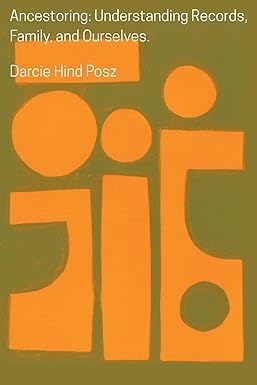
    Ancestoring: Understanding Records, Family, and Ourselves by Darcie Hind Posz (Genealogical Publishing Company, 2026)

    In 1926, Carl Jung concluded a lecture to a literary society in Augsburg with the claim that the archetypes buried in our collective unconscious carry ‘the deposit of man’s whole ancestral experience,’ which genealogist Hank Jones later interpreted in Psychic Roots as meaning that ‘we inherit the wisdom of the experience of our ancestors without ourselves having personal experience.’ This is one of many thought-provoking influences and references that appear in this exciting new book from accomplished US genealogist and writer Darcie Hind Posz. Its eighteen chapters are alive with ideas and inspiration. I found it fascinating and have found myself returning repeatedly, pondering how I can apply the thoughts and examples to my own family history. Completely different from many of the genealogy books out there, Ancestoring brings influences from the current memoir or ancestral self-discovery vein, which has prevailed in publishing in recent years. 

    In her preface, Hind Posz defines Ancestoring as, ‘The observation and collection of methodologies, theories, and solutions to everyday items as related to genealogy.’ The entire book involves fresh ideas and inspires the reader to look anew at their own family tree and the assumptions they’ve made about their ancestors. From its title to the use of examples (the section on source analysis, in particular, is revelatory) and quotations from a wide range of genealogical papers, this is something original and illuminating. 

    The book’s dedication quotes from William B Saxbe, Jr., who refers to ‘thoughtful genealogists’. That appears to be the target audience here. If you consider yourself a ‘thoughtful genealogist’, then, without doubt, this is the book for you.

    Interview with Darcie Hind Posz, CG®, FASG

    What was your background before writing this book? 

    I have been working in libraries and as a genealogist for twenty years. I have been a verifying genealogist for several lineage societies. I have worked as an editor for a publication. I have volunteered. When I was not doing that, I was finding time to write, which I enjoy. 

    I hadn’t heard the term “Ancestoring” before this. How did you come up with the title of the book? 

    At first, I wanted a field guide or something like a field guide for all of these methods that I had used over the years that worked for me. I liked ancestoring to describe it because it was not strict, but a bit whimsical and in that grey area. I had the idea in 2017 originally to use pictures to describe how I visualized solving genealogical problems I carried with me, and I had begun to collect notebooks full of doodles. During the pandemic, I came back to the notebooks because I was running out of projects. It kept getting bigger, so I made myself commit to finding a publisher open to a book that is hard to describe. 

    This is your fourth book. How does it differ from your previous titles? 

    This book is different because I feel like I got to keep my voice in it. When you write a genealogy, you are an observer of a family; your tone is kept in check with the documents formulating the narrative. When you write about a region, again, you are kept in check by the resources you are discussing. Both are pointing the reader to resources and then a family narrative to evaluate and observe. But getting to the part where you have a final family narrative to publish or distribute is not that simple. There are rabbit holes, diatribes, blind alleys, and other things (like losing an entire line in the pedigree), where they have no room in the final product. I wanted to show that and work in progress because what didn’t work for my genealogical problem may work for someone else’s. 

    In Part Two (Understanding Families), you write: “Rather than judging our subjects, which will likely flatline the part of our brain we use to understand them, observe and evaluate their actions.” This approach strongly resonates with my own work in personal family history research, as well as what I encourage in my clients. Do you think genealogists are shifting in how they approach their ancestors (e.g. those considered “black sheep”) compared to how family history was typically handled in the recent past? 

    I hope they are. It is hard. It would be nice to have deeper conversations about topics like this. It is easy to judge swiftly when an ancestor does something and to label it. But we need to think of those we study not as something like a document. As their lifetime progressed, they shifted and changed. Think about how you have done things during your life. Maybe you did something that seemed like a good idea at the time, and now you regret it. We all do it. Those we study in genealogy did the same. That is why I liked to frame it as withholding judgment, so that you do not know yet if they are the good or bad person in the story. Just watch longer. 

    In Part Three (Understanding Ourselves), you touch on genetic genealogy, writing that, “DNA will overturn many previously proven or established pedigrees.” What is the most powerful discovery you have made through DNA research? 

    I was sure of my lineage until DNA overturned it, and although DNA is this wonderful evidence available now, just like documentation, we will have to wait as more of it becomes available by waiting for more people to take DNA tests and providing a larger pool for those of certain ethnicities. I will spend the rest of my life combing through match lists to see if there is a hint of that line! Since it will be a lifelong process, I will need to keep up-to-date on the technology and methods for it. 

    What are your future plans? Can we expect more books from you?  

    More books, of course! 🙂
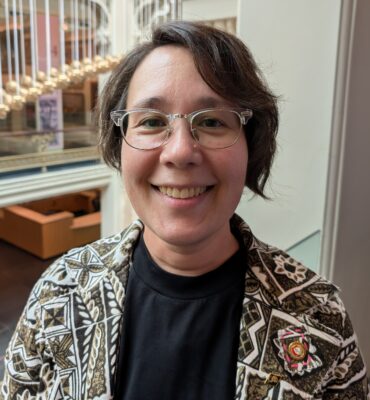
    Darcie Hind Posz, CG®, FASG, is an author, genealogist, and researcher, and has been a board-certified genealogist since 2013. In 2023, she was elected a Fellow of the American Society of Genealogists. Darcie Hind Posz is an author, genealogist and researcher. Posz authored three other books: Chicago Stones: A Genealogy of Acquisition, Influence & Scandal; Recast: Vital Events Published in Variety in 1918 and 1919; and Research in Hawaii, part of the National Genealogical Society’s Research in the State series, was published in 2024. Her extensive bibliography can be found at her website, darciehindposz.com


  2. Book Review and Author Interview: Immigrant Secrets by John Mancini

    Immigrant Secrets: The Search for My Grandparents by John Mancini (2022)

    That John Mancini is an experienced speaker in his professional life is apparent in the engaging presentation style of his writing. His entertaining introduction, with its references to the TV show The Wonder Years and Kevin Costner’s movie Field of Dreams, indicates his fondness for imaginative storytelling. 

    All family historians and memoir writers must choose how best to relate the truth of their or their subjects’ experiences. The main section of the book is fictionalised (in the manner of Paula McLain’s The Paris Wife, for example). As Mancini explains:

    “The facts that surround the story of Elizabeth and Frank are true, but the color and texture that surround those facts are my own creations to give them life.”

    The imaginative approach used here may not appeal to all, but there is no question about the thoroughness of the genealogical research. Among the documents sourced from archives across the world are census entries, excerpts from church registers, death certificates, hospital records, ships’ passenger lists and immigration records. A selected bibliography is included at the end.

    Mancini clearly enjoyed the family history experience, speaking positively of the community:

    ‘One of the great things of doing genealogy research is that folks are extraordinarily interested in helping each other solve their puzzles.’ 

    Overall, the book is an insight into one man’s genealogical journey, and how he was changed by his discoveries, as much as it is a story of his ancestors. Although his Irish and Swedish immigrant forebears are introduced in the early chapters, the main focus is on his Italian grandparents (Elizabeth/Elisabetta and Frank/Francesco), their origins in Itri (a small agricultural centre in Lazio), and their new life in the United States. 

    Throughout the fascinating story of immigrant life in mid-century New York, we are mindful of the mystery of Mancini’s grandparents’ deaths. Did they or did they not die in a fire in the 1930s, as family rumour suggested? It is well worth taking this narrative journey through the family’s immigrant history to find out.

    What was your background before writing this book?

    I spent over 35 years working in three major non-profit associations, 1) the Public Affairs Council, 2) the American Electronics Association, and 3) AIIM International. As the President of AIIM, I spent a lot of time with records managers, archivists, and content and process management executives. Personally, I am the grandfather of three, the father of three, and I have five siblings. I was a history major as an undergraduate, which I think helped create the foundation for my interest in family history and genealogy.

    Why did you want to write about your immigrant ancestors? 

    The story of the search itself is a rather typical family history journey, albeit one that revealed things I never could have imagined about our family. One thing I have found along this journey is that genealogy people are incredibly helpful. I spent a good portion of the last 20+ years of my career hanging about with records managers and archivists. I will admit that in the rush to embrace the latest and greatest technology shiny gadgets, I didn’t always understand or appreciate them. But I do now. Any errors in genealogy are not intentional. But they’re my fault.

    The story of my Italian grandparents is in fact a story. But it is, as they say in movie previews, “based on a true story.” The facts that surround the story of Elizabeth and Frank are true, but obviously, the texture that surrounds those facts and the story incorporating the facts are my own creations to give them life. 

    As Rachel Held Evans said, “Origin stories are rarely straightforward history. Over the years, they morph into a colourful amalgam of truth and myth, nostalgia and cautionary tale.”

    Did you have any concerns about sharing private aspects of your family’s story?

    My brother and I debated whether to raise all this secret history with my mom and ultimately decided that telling the story was the way to keep my father’s story alive. We thought for a while about what to ask my mom about all of this, and what she knew.

    My father must have somehow coped with the complete disaster of his childhood by creating an enormous, sealed wall around it, never to be scaled or even discussed. Against a society that viewed – and continues to view – any sort of mental illness through a prism of shame, he and the rest of this extended family of immigrants just shut down the memory of Francesco and Elisabetta and completely erased them from history. Well, not quite.

     And my father kept all of this bottled up so that first HE could survive and protect his brother and then later protect his own family of eight. I imagine that over the years this pressure cooker of secrets ultimately contributed to his premature death. Ultimately we decided the best way to honour his memory was to tell his story.

    Do you feel a strong connection to Italy? Has this deepened since working on the book?

    I have been to Italy four or five times, and love it. A pre-COVID dream – and one I still hope to realize – was to spend an extended time in my grandparents’ home town. All of this deepened with the book and actually making connections with the Italian side of the family that we never knew existed.

    What’s next for you? Any more books?

    One of the things I realized after writing the book and talking to people about it is that EVERY family has a story. Many of these origin stories are not what we would have guessed – and many of them are frankly not pleasant – but they are all nonetheless precious.

    I am currently researching my maternal grandfather’s story – John Oliver Manson. He was quite a character. He was born in Sweden – but always claimed to have been born in Australia. I believe he stowed away on a ship when he was a teenager. One medical report says he suffered a gunshot wound as a teenager in Rio. He was a leading ship captain in Miami prior to the Depression, lost most of what he had during the Depression, and dabbled in a silver mine in Nevada. And much more, I’ve started documenting his story on my blog – http://www.searchformygrandparents.com – so we’ll see where that goes.

    My wife’s family goes all the way back to the 1700s in Virginia, fought on the wrong side in the US Civil War, and has LOTS of untold stories. So many stories, so little time.


    John Mancini was the long-time President of AIIM, the world’s leading information management association. He is a well-known author, speaker, and advisor on genealogy, digital transformation, information governance, and intelligent automation. He is the author of Immigrant Secrets, writes about family history topics at http://www.searchformygrandparents.com, and is the author of more than 30 eBooks on a variety of topics. He can be found on Twitter, LinkedIn and Facebook.

Latest From Emma's Blog

A History of the Census Takers: Recording the Nations by Mish J Holman (Pen & Sword, 2026)

Looking beyond the census returns to explore the lives and personalities of the people who created them A History of […]

[Read more]

Book Review and Author Interview: A History of Parish Registers in England and Wales: From the Restoration to Civil Registration by John Wintrip (The Lutterworth Press, 2026)

A History of Parish Registers in England and Wales: From the Restoration to Civil Registration by John Wintrip (The Lutterworth Press, […]

[Read more]

Member of The Society of Authors Member of The Association of Genealogists and Researchers in Archives Graduate of the Institute of Heraldic and Genealogical Studies Canterbury Member of the Society of Genealogists Pharos Tutors