writer, historian, genealogist

  • Home
  • Books
  • Research
    • Research Options
    • Genealogy Research Request
  • Consultations
  • Teaching
  • Media
  • About
  • Blog
  • Contact

Blog

I have a personal interest in football history as my great-grandfather’’s cousin, Joe Smith (1889-1971), was one of the best professional footballers of his generation. He is second only to the legendary Nat Lofthouse as Bolton’’s top goalscorer, and his 38 goals in season 1920/21 remain a club record.

Emma Jolly, in the article The National Football Museum

Emma Jolly writer, historian, genealogist

Category Archives: Social History

  1. Book Review and Author Interview: A History of Parish Registers in England and Wales: From the Restoration to Civil Registration by John Wintrip (The Lutterworth Press, 2026)
    May 8, 2026

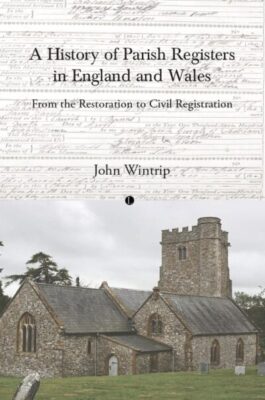
    A History of Parish Registers in England and Wales: From the Restoration to Civil Registration by John Wintrip (The Lutterworth Press, 2026)

    As expected from a genealogist of John Wintrip’s calibre and experience, A History of Parish Registers in England and Wales is a work of meticulous research and impressive detail. Even readers already familiar with the history of parish registers will find much that is new here. Who knew, for example, that one of the earliest diocesan initiatives to improve parish registers in the late eighteenth century emerged from the Diocese of Carlisle?

    Wintrip makes potentially dense material highly accessible through a varied layout, generous use of examples, and an excellent range of primary sources. The book is also supported by a detailed index and glossary, making it a practical reference work as well as a scholarly study.

    The chapters move systematically through the development of parish registers, beginning with their origins before 1660 and tracing their evolution through major legislative and diocesan reforms up to civil registration in 1837. I love the use of the regional case studies (Carlisle, York, Chester, St Asaph, Norwich, Salisbury, and Durham), which are enjoyable to read, while also showing just how varied local practice could be across England and Wales.

    This is a valuable book for beginners, experienced family historians, and professional researchers alike. More than simply a guide to registers, it offers a wide-ranging view of the parish system itself and the socio-historical framework within which records were created and maintained. As Wintrip notes, the study is concerned solely with the parish registers of the Church of England. But, by retaining this tight focus, the work ultimately brings fresh depth to the record-keeping culture that underpins English family history research from the sixteenth century onwards.

    Interview with John Wintrip

    What was your background before writing this book?

    After graduating in chemistry in 1973, my first career was as a science librarian, working mainly in universities. Having developed a keen interest in my own family history during the 1990s, the chance to take early retirement in 2007 provided an opportunity to pursue a new career as a professional genealogist. In anticipation of this possibility, I had already gained an IHGS Higher Certificate in 2006 and was subsequently awarded a Diploma in Genealogy in 2008. I was admitted as a Member of AGRA in 2009.

    Having long been aware of the dearth of books providing guidance on researching before 1837, and after several years as a professional genealogist, I subsequently wrote two books covering this period. While writing these books, I became particularly interested in the origins of the detailed parish registers introduced in several dioceses and a few parishes elsewhere in the late eighteenth century, so decided to investigate this topic as a personal project after retiring from professional practice, presenting my findings in the form of an IHGS Licentiateship dissertation in 2019. I have continued to investigate features and idiosyncrasies of parish registers for which there is little or no explanation in the published literature, and have written several articles for the Genealogists’ Magazine.

    Why did you choose parish registers as the subject of your latest book?

    The most recent book to cover the history of parish registers in any detail was published in 1968 (General Sources of Births, Marriages and Deaths before 1837, by D.J. Steel; volume 1 of the National Index of Parish Registers). Several new discoveries in relation to the parish registers of the long eighteenth century have subsequently been made, initially by archivists, local historians and historical demographers, and more recently by me. I therefore began to think about bringing together what is now known about parish registers during this period into a coherent narrative, which could potentially be published in the form of a book. I was very fortunate that Lutterworth Press were sufficiently intrigued by my proposal to offer me a contract.

    You have examined changes in official records in England and Wales during a period of considerable transformation. Which element did you find most noteworthy?

    I think the most noteworthy element is the exceedingly slow pace of reform. Civil registration was introduced in France in 1792, for example. When it was finally introduced in England and Wales in 1837, the existing system of parochial registration had been widely acknowledged as not fit for purpose for the best part of a century.

    Few people are aware that the system for recording births, marriages and deaths in England and Wales could have been completely transformed in the mid-eighteenth century if voting in Parliament had taken a different course. Bills proposing considerable improvements in the recording of births, marriages and deaths were introduced in 1753 and 1758, but both were rejected. It is interesting – although ultimately frustrating and futile – to consider how things might have developed had one of these Bills been enacted.

    You highlight several significant individuals throughout the book. Was there one who stood out to you in particular?

    Yes, Shute Barrington (1734-1826), who served as Bishop of Durham from 1791 until his death, and appears to be the only bishop to have taken a personal interest in the improvement of parochial registration. He was already engaging with this issue while serving as Bishop of Llandaff, communicated his concerns and proposals to clergy in the Diocese of Salisbury in 1789, and finally introduced his unique and innovative system for registering baptisms and burials in the Diocese of Durham in 1798, where it was followed in virtually every parish until standard printed registers were introduced in 1813.

    Although Barrington’s initiative was relatively short-lived in comparison with similar initiatives in other dioceses, I consider his forms of entry to have been the most efficacious, as they achieved a fine balance between the ability of informants to provide the details being asked for and the usefulness for posterity of the information being recorded.

    What are your future plans? Can we expect more books from you?

    Having begun my research into the history of parish registers almost a decade ago, I have no plans to write any more books. Although I think there is a clear need for an up-to-date work on the history of non-Anglican registers, I have neither the inclination nor the motivation to embark on such a project at my stage in life. However, there are a few topics in relation to parish registers, which I have touched on in my book, that I would like to explore further, such as the apparent divergence in meaning between ‘baptism’ and ‘christening’ in some parish registers towards the end of the eighteenth century. I may write further articles for the Genealogists’ Magazine if I make any significant discoveries.


    John Wintrip began investigating his family history in the 1990s. Following an earlier career as a science librarian and a decade of practising as a professional genealogist, he turned his attention to investigating features and idiosyncrasies of parish registers for which he had found no satisfactory explanation in the recent published literature, receiving a Licentiateship in Heraldry and Genealogy for his dissertation on this topic in 2019. He has been a Member of the Association of Genealogists and Researchers in Archives (AGRA) since 2009.
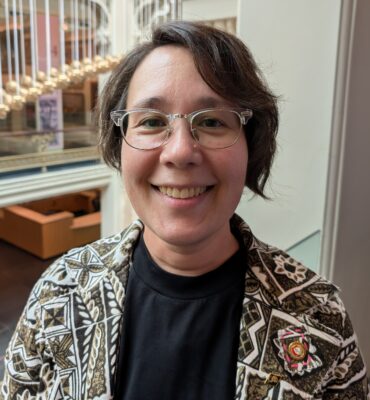
  2. Book Review and Author Interview: Ancestoring: Understanding Records, Family, and Ourselves by Darcie Hind Posz

    April 3, 2026

    Ancestoring: Understanding Records, Family, and Ourselves by Darcie Hind Posz (Genealogical Publishing Company, 2026)

    In 1926, Carl Jung concluded a lecture to a literary society in Augsburg with the claim that the archetypes buried in our collective unconscious carry ‘the deposit of man’s whole ancestral experience,’ which genealogist Hank Jones later interpreted in Psychic Roots as meaning that ‘we inherit the wisdom of the experience of our ancestors without ourselves having personal experience.’ This is one of many thought-provoking influences and references that appear in this exciting new book from accomplished US genealogist and writer Darcie Hind Posz. Its eighteen chapters are alive with ideas and inspiration. I found it fascinating and have found myself returning repeatedly, pondering how I can apply the thoughts and examples to my own family history. Completely different from many of the genealogy books out there, Ancestoring brings influences from the current memoir or ancestral self-discovery vein, which has prevailed in publishing in recent years. 

    In her preface, Hind Posz defines Ancestoring as, ‘The observation and collection of methodologies, theories, and solutions to everyday items as related to genealogy.’ The entire book involves fresh ideas and inspires the reader to look anew at their own family tree and the assumptions they’ve made about their ancestors. From its title to the use of examples (the section on source analysis, in particular, is revelatory) and quotations from a wide range of genealogical papers, this is something original and illuminating. 

    The book’s dedication quotes from William B Saxbe, Jr., who refers to ‘thoughtful genealogists’. That appears to be the target audience here. If you consider yourself a ‘thoughtful genealogist’, then, without doubt, this is the book for you.

    Interview with Darcie Hind Posz, CG®, FASG

    What was your background before writing this book? 

    I have been working in libraries and as a genealogist for twenty years. I have been a verifying genealogist for several lineage societies. I have worked as an editor for a publication. I have volunteered. When I was not doing that, I was finding time to write, which I enjoy. 

    I hadn’t heard the term “Ancestoring” before this. How did you come up with the title of the book? 

    At first, I wanted a field guide or something like a field guide for all of these methods that I had used over the years that worked for me. I liked ancestoring to describe it because it was not strict, but a bit whimsical and in that grey area. I had the idea in 2017 originally to use pictures to describe how I visualized solving genealogical problems I carried with me, and I had begun to collect notebooks full of doodles. During the pandemic, I came back to the notebooks because I was running out of projects. It kept getting bigger, so I made myself commit to finding a publisher open to a book that is hard to describe. 

    This is your fourth book. How does it differ from your previous titles? 

    This book is different because I feel like I got to keep my voice in it. When you write a genealogy, you are an observer of a family; your tone is kept in check with the documents formulating the narrative. When you write about a region, again, you are kept in check by the resources you are discussing. Both are pointing the reader to resources and then a family narrative to evaluate and observe. But getting to the part where you have a final family narrative to publish or distribute is not that simple. There are rabbit holes, diatribes, blind alleys, and other things (like losing an entire line in the pedigree), where they have no room in the final product. I wanted to show that and work in progress because what didn’t work for my genealogical problem may work for someone else’s. 

    In Part Two (Understanding Families), you write: “Rather than judging our subjects, which will likely flatline the part of our brain we use to understand them, observe and evaluate their actions.” This approach strongly resonates with my own work in personal family history research, as well as what I encourage in my clients. Do you think genealogists are shifting in how they approach their ancestors (e.g. those considered “black sheep”) compared to how family history was typically handled in the recent past? 

    I hope they are. It is hard. It would be nice to have deeper conversations about topics like this. It is easy to judge swiftly when an ancestor does something and to label it. But we need to think of those we study not as something like a document. As their lifetime progressed, they shifted and changed. Think about how you have done things during your life. Maybe you did something that seemed like a good idea at the time, and now you regret it. We all do it. Those we study in genealogy did the same. That is why I liked to frame it as withholding judgment, so that you do not know yet if they are the good or bad person in the story. Just watch longer. 

    In Part Three (Understanding Ourselves), you touch on genetic genealogy, writing that, “DNA will overturn many previously proven or established pedigrees.” What is the most powerful discovery you have made through DNA research? 

    I was sure of my lineage until DNA overturned it, and although DNA is this wonderful evidence available now, just like documentation, we will have to wait as more of it becomes available by waiting for more people to take DNA tests and providing a larger pool for those of certain ethnicities. I will spend the rest of my life combing through match lists to see if there is a hint of that line! Since it will be a lifelong process, I will need to keep up-to-date on the technology and methods for it. 

    What are your future plans? Can we expect more books from you?  

    More books, of course! 🙂

    Darcie Hind Posz, CG®, FASG, is an author, genealogist, and researcher, and has been a board-certified genealogist since 2013. In 2023, she was elected a Fellow of the American Society of Genealogists. Darcie Hind Posz is an author, genealogist and researcher. Posz authored three other books: Chicago Stones: A Genealogy of Acquisition, Influence & Scandal; Recast: Vital Events Published in Variety in 1918 and 1919; and Research in Hawaii, part of the National Genealogical Society’s Research in the State series, was published in 2024. Her extensive bibliography can be found at her website, darciehindposz.com. 


  3. Book Review and Author Interview: Angel Meadow by Dean Kirby

    November 21, 2023

    Angel Meadow

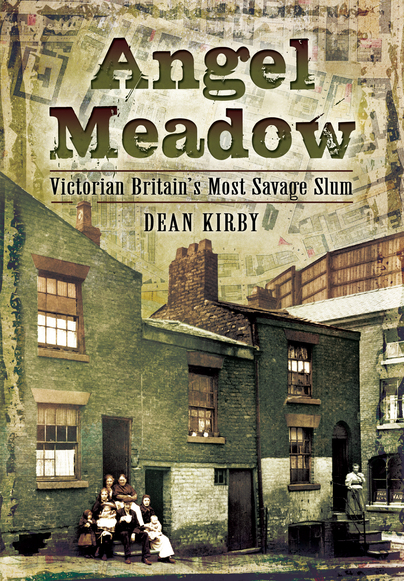
    Angel Meadow: Victorian Britain’s Most Savage Slum by Dean Kirby (P&S History, 2016)

    Dean Kirby’s immersive exploration of Manchester’s Angel Meadow slum in the Victorian era is a compelling journey into one of the most notorious and dangerous neighbourhoods of the Industrial Revolution. In his meticulously researched book, Kirby, drawing on his journalistic background, vividly resurrects the scenes and characters that define this grim chapter in history.

    The book is thoughtfully structured around real events, offering readers a glimpse into the shocking and colourful stories that unfolded in Angel Meadow. Kirby’s dedication to historical accuracy is evident, as he taps into a diverse range of sources, including newspaper accounts, police reports, teachers, missionaries, and magistrates. This thorough approach results in a comprehensive historical record that becomes an essential resource for anyone interested in the lives of those who inhabited this bleak corner of the northern metropolis.

    What sets Kirby’s work apart is not only its historical depth but also its connection. This project is a labour of love for the author, inspired by the experiences of his ancestor, William Kirby, a farm labourer who fled Ireland’s Great Hunger only to face the grim reality of the industrial north.

    The narrative is enriched with a glossary of Angel Meadow slang, providing a linguistic window into the past, and supplemented by a bibliography, research notes, and a detailed index. These elements contribute to the book’s value as both an engaging read and a scholarly reference.

    In summary, Dean Kirby’s book on Angel Meadow is a masterful blend of historical documentation and personal passion. It not only brings to life a vivid and dangerous Victorian slum but also honours the author’s familial connection to the tumultuous events that unfolded in this dark corner of Manchester’s past.

    Interview with Dean Kirby

    What was your background before writing this book?  

    I was born and grew up in Manchester and am very proud of the city and fascinated by its history. Manchester was the first industrial city and played a significant role in the creation of the modern world. My dad has always told me stories about Ancoats, the inner city district where he lived as a young lad, and we would spend hours in Manchester Central Library in the 1980s researching our family history – before genealogy was fashionable – using the old, dimly-lit microfilm readers that genealogists used before records were digitised and which were probably really bad for your eyes. After university, I became a journalist and I’ve spent most of my career working in Manchester – going out into communities and talking to ordinary Mancunians about what was happening in their lives – which has given me an even greater appreciation for my home city and its people. The book happened really because these two things – my family history and my passion for the city and its history – came together quite dramatically in 2016.  

    Your ancestor William Kirby lived in Angel Meadow. Was it solely the discovery of his residence there that inspired you to write about Victorian Britain’s most challenging slum, or were there other motivating factors?

    I had been researching my Irish ancestor William Kirby, my 3 x great-grandfather, on and off since those early days in the library with my dad. William was a farm labourer from County Mayo who arrived in Manchester in the 1860s. Like a lot of poor Irish immigrants at that time, he lived with his family underground in a cellar. Using maps, rate books and other records, I eventually managed to locate the site of his house in a car park in Angel Meadow, where I used to park my car because it was convenient for the Arndale Centre. In Manchester, when slum clearances took place after the Second World War, the houses were simply backfilled into cellar holes and sealed over with concrete. As the city centre is largely flat, a lot of that land was turned into surface car parks which are only just now being redeveloped. 
    One night in 2016, I was walking past the car park where Williams’ house had been with my wife as we went to a Noel Gallagher gig at Manchester Arena and noticed that, amazingly, there was a fence up and a big sign saying “archaeologists at work”. The next day I went back and told them my story. They invited me inside to look at their finds and later let me bring along my dad to climb down a ladder into the cellar holes and touch the bricks of William’s fireplace. They let me take the brick home and I’ve kept it. It still has soot on it from the fire that would have kept him warm on a winter’s day. A death certificate showed that one of William’s children, also called William, died in that house from a fever aged just two weeks old. It says something about the horrible living conditions there, but it also affected the archaeologists, they said, because that’s how long their dig lasted – the same number of days as baby William’s short life. 

    Visiting the house was a hugely poignant moment for me. As family historians, we all spend our time searching for pieces of paper that will give us a glimpse of how our ancestors lived, but in that moment, we were able to walk right through the front door. That moment inspired me to write the book about the district where William lived and to go on to do a doctorate in urban history – researching the Victorian housing conditions in the same area of Manchester. It means I’ve been researching that small area of the city for a decade now. I’m still very grateful to the archaeologists who didn’t turn me away when I turned up with what must have seemed a surprising story. Instead, they invited me in and encouraged me, and I’m hoping that my PhD study of Angel Meadow’s housing will give something back to them and help them in their own research going forward.   
     

    Did you have concerns about portraying some of the distressing stories you encountered during your research?

    I did have concerns about portraying some of the distressing stories in the book and there were some that I left out because they were just too unbearable to write about. It was also quite harrowing at times being immersed in those stories during what was four years of research and writing. One story that played on my mind quite a bit was about a woman named Annie Chapman, who was found dead in a privy in Angel Meadow. It’s only a few paragraphs in the book, but her story was so tragic that I thought about her quite a lot while I was writing. One valid criticism of the book was that I didn’t write about the families who lived good, honest lives and never found themselves in trouble with the police or the pages of a newspaper. I totally agree and there’s also an obvious gap in telling the stories of women who lived in working-class districts in the nineteenth century because their stories are often missing from the historical record, or written by men such as police officers and church missionaries who knew nothing really about women’s lives. All I could do, as I was writing about an era which no one is alive to remember, was to use as many different sources as I could find and try my best to portray people’s lives as accurately and fairly as I could. I also felt it was important to treat the people whose stories I was telling with respect and be a voice for them if I was able, as, like my own family who lived in the district, these were real people and the ancestors of modern-day Mancunians. In a way, the book was my attempt to keep alive the stories of those people and to explain what they went through while living in very difficult circumstances.

    Who was the most memorable individual you encountered in your research for the book?

    There were a few memorable people I encountered in my research and some had interesting nicknames such as Cabbage Ann, the Badger, One-Armed Kitty and Jemmie the Crawler. One thing I enjoyed doing was using genealogy techniques to try to work out the real identities of the people behind the nicknames and find out a bit more about their lives. The Badger, for example, was a thief named John Currie and it was said that he could climb down coal chutes to break into houses. By looking at his prison record though, I also found that his distinguishing marks included his neck being bloated and badly scarred by scrofula, an infection of the lymph nodes caused by tuberculosis. It’s a horrible nickname to have given to someone with a medical condition, but in the days before mugshots and fingerprinting the name would have been a way for police officers to identify him in the street. Cabbage Ann’s real name was Ann Powell and she ran a grocer’s shop and a lodging house. She was a notorious thief trainer who taught youths how to be “breech buzzers” or pickpockets. The most memorable person in my research though was a violent character named Henry Burgess, who would go around Angel Meadow attacking passers-by and the police with anything he could lay his hands on. He had 40 convictions to his name including killing an opponent by throwing a paraffin lamp at him and setting him on fire. I was very lucky to find a photograph of Henry in the Staffordshire Gaol image archive, which is a useful resource for historians searching for Victorian criminals who were transported from the North of England to jails in the South such as Dartmoor, Pentonville and Parkhurst. They would stop at Stafford Gaol on the way and have their photograph taken. It was fascinating to see Henry’s piercing eyes peering back at me in the photograph and to notice that on his neck he had a huge scar, which may have been a knife wound that would have put his life in danger before he was stitched up by a surgeon. 

    One of my greatest joys in writing the book is that I have been contacted by lots of people who have found their ancestors in the index and have been in touch to find out more information. I was really lucky to chat with one of Henry Burgess’s descendants recently who wanted help with their genealogy research and I was able to pass on some documents and the photograph. They had been unaware of his past until reading about him in the book and it was a real privilege to chat to them after spending so much time thinking and writing about Henry during my own research. 

    What’s next? Can we expect more books?

    Since writing the book, I have been taking an even deeper dive into Angel Meadow by researching my PhD, which I finished last year. I really enjoyed it but I’m keen now to write another Manchester history book. I am currently doing some research. Beyond that, I’ve started a newsletter telling stories from the streets of Victorian Manchester, which is free to join. I’m also in the process of setting up a genealogy business so I can help more people find their Mancunian ancestors and tell their stories.    

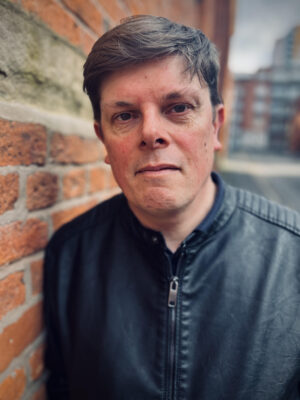
    Dean Kirby is an award-winning investigative journalist whose nominations include being shortlisted for the Orwell Prize for Exposing Britain’s Social Evils for his work on the UK’s fuel poverty crisis. His book on Angel Meadow has been in the Amazon best-seller lists. He now writes a weekly newsletter telling stories from the streets of Victorian Manchester, which can be found at www.manchesterhistory.uk.

  4. Book Review and Author Interview: Immigrant Secrets by John Mancini

    January 17, 2023

    Immigrant Secrets: The Search for My Grandparents by John Mancini (2022)

    That John Mancini is an experienced speaker in his professional life is apparent in the engaging presentation style of his writing. His entertaining introduction, with its references to the TV show The Wonder Years and Kevin Costner’s movie Field of Dreams, indicates his fondness for imaginative storytelling. 

    All family historians and memoir writers must choose how best to relate the truth of their or their subjects’ experiences. The main section of the book is fictionalised (in the manner of Paula McLain’s The Paris Wife, for example). As Mancini explains:

    “The facts that surround the story of Elizabeth and Frank are true, but the color and texture that surround those facts are my own creations to give them life.”

    The imaginative approach used here may not appeal to all, but there is no question about the thoroughness of the genealogical research. Among the documents sourced from archives across the world are census entries, excerpts from church registers, death certificates, hospital records, ships’ passenger lists and immigration records. A selected bibliography is included at the end.

    Mancini clearly enjoyed the family history experience, speaking positively of the community:

    ‘One of the great things of doing genealogy research is that folks are extraordinarily interested in helping each other solve their puzzles.’ 

    Overall, the book is an insight into one man’s genealogical journey, and how he was changed by his discoveries, as much as it is a story of his ancestors. Although his Irish and Swedish immigrant forebears are introduced in the early chapters, the main focus is on his Italian grandparents (Elizabeth/Elisabetta and Frank/Francesco), their origins in Itri (a small agricultural centre in Lazio), and their new life in the United States. 

    Throughout the fascinating story of immigrant life in mid-century New York, we are mindful of the mystery of Mancini’s grandparents’ deaths. Did they or did they not die in a fire in the 1930s, as family rumour suggested? It is well worth taking this narrative journey through the family’s immigrant history to find out.

    What was your background before writing this book?

    I spent over 35 years working in three major non-profit associations, 1) the Public Affairs Council, 2) the American Electronics Association, and 3) AIIM International. As the President of AIIM, I spent a lot of time with records managers, archivists, and content and process management executives. Personally, I am the grandfather of three, the father of three, and I have five siblings. I was a history major as an undergraduate, which I think helped create the foundation for my interest in family history and genealogy.

    Why did you want to write about your immigrant ancestors? 

    The story of the search itself is a rather typical family history journey, albeit one that revealed things I never could have imagined about our family. One thing I have found along this journey is that genealogy people are incredibly helpful. I spent a good portion of the last 20+ years of my career hanging about with records managers and archivists. I will admit that in the rush to embrace the latest and greatest technology shiny gadgets, I didn’t always understand or appreciate them. But I do now. Any errors in genealogy are not intentional. But they’re my fault.

    The story of my Italian grandparents is in fact a story. But it is, as they say in movie previews, “based on a true story.” The facts that surround the story of Elizabeth and Frank are true, but obviously, the texture that surrounds those facts and the story incorporating the facts are my own creations to give them life. 

    As Rachel Held Evans said, “Origin stories are rarely straightforward history. Over the years, they morph into a colourful amalgam of truth and myth, nostalgia and cautionary tale.”

    Did you have any concerns about sharing private aspects of your family’s story?

    My brother and I debated whether to raise all this secret history with my mom and ultimately decided that telling the story was the way to keep my father’s story alive. We thought for a while about what to ask my mom about all of this, and what she knew.

    My father must have somehow coped with the complete disaster of his childhood by creating an enormous, sealed wall around it, never to be scaled or even discussed. Against a society that viewed – and continues to view – any sort of mental illness through a prism of shame, he and the rest of this extended family of immigrants just shut down the memory of Francesco and Elisabetta and completely erased them from history. Well, not quite.

     And my father kept all of this bottled up so that first HE could survive and protect his brother and then later protect his own family of eight. I imagine that over the years this pressure cooker of secrets ultimately contributed to his premature death. Ultimately we decided the best way to honour his memory was to tell his story.

    Do you feel a strong connection to Italy? Has this deepened since working on the book?

    I have been to Italy four or five times, and love it. A pre-COVID dream – and one I still hope to realize – was to spend an extended time in my grandparents’ home town. All of this deepened with the book and actually making connections with the Italian side of the family that we never knew existed.

    What’s next for you? Any more books?

    One of the things I realized after writing the book and talking to people about it is that EVERY family has a story. Many of these origin stories are not what we would have guessed – and many of them are frankly not pleasant – but they are all nonetheless precious.

    I am currently researching my maternal grandfather’s story – John Oliver Manson. He was quite a character. He was born in Sweden – but always claimed to have been born in Australia. I believe he stowed away on a ship when he was a teenager. One medical report says he suffered a gunshot wound as a teenager in Rio. He was a leading ship captain in Miami prior to the Depression, lost most of what he had during the Depression, and dabbled in a silver mine in Nevada. And much more, I’ve started documenting his story on my blog – http://www.searchformygrandparents.com – so we’ll see where that goes.

    My wife’s family goes all the way back to the 1700s in Virginia, fought on the wrong side in the US Civil War, and has LOTS of untold stories. So many stories, so little time.


    John Mancini was the long-time President of AIIM, the world’s leading information management association. He is a well-known author, speaker, and advisor on genealogy, digital transformation, information governance, and intelligent automation. He is the author of Immigrant Secrets, writes about family history topics at http://www.searchformygrandparents.com, and is the author of more than 30 eBooks on a variety of topics. He can be found on Twitter, LinkedIn and Facebook.

  5. Book Review: Hitler’s Forgotten Children: the shocking true story of the Nazi kidnapping conspiracy by Ingrid von Oelhafen & Tim Tate (Elliott & Thompson, 2017)

    September 16, 2018

    Hitler’s Forgotten Children: the shocking true story of the Nazi kidnapping conspiracy by Ingrid von Oelhafen & Tim Tate (Elliott & Thompson, 2017)

    Hitler’s Forgotten Children is a powerful, personal history of the Nazi Lebensborn programme and its long-lasting effects.

    Next year marks 80 years from the beginning of the Second World War. This book highlights just one of many aspects of that conflict that are yet to enter mainstream historiography.

    As we move further from the end of the war, more secrets of the conflict are being revealed. Ingrid von Oelhafen was born in 1942 as ‘Erika’. Although Yugoslavian, she was forcibly adopted into a Nazi family and given a new identity as part of the Lebensborn programme. This was created in 1935 by the SS, under the charge of Heinrich Himmler (1900-1945).

    . . . the older I became, the more I wondered about my personal history. I am not alone in this: it is part of the human condition to revisit the past as the years slip away.

    Von Oelhafen’s story, told here with the help of filmmaker and author Tim Tate, covers not only her wartime struggles in Nazi Germany but what happened after she discovered she was adopted and her attempts to understand the truth. These enquiries would reveal the full scale of the Lebensborn scheme, including the kidnapping of half a million babies and the deliberate murder of children born into the programme who were deemed ‘substandard’.

    Van Oelhafen wrote, ‘All those I have met – whether born into the Lebensborn program or kidnapped to strengthen it – have been scarred by their experience.’ Not all history stays in the past. This book raises many questions, not just about the war, but also of the subsequent division of Germany, and the manner in which Europe recovered from the conflict – often leaving truths hidden and crimes unsolved. The troubled history of Eastern Europe is something about which many of us in the West still do not know enough. This is not just a story of the tragedy of war, but of the suffering that continued long after it. Many families were ripped apart forever, as the conflict left a dark legacy for decades ahead.

    With the current climate of tension across Europe, and as extremist parties are again on the rise, personal testimonies such as this make an essential contribution to a period many today are yet to fully understand. Von Oelhafen dedicates the book to, ‘all the victims of Nazi Germany – men, women and, above all, children – and to those throughout the world today who suffer from the persisting evil which teaches that one race, creed or colour is superior to another.’

    . . . the Lebensborn experiment had been based on the Nazi’s belief in blood as the determining factor of human worth. Himmler’s obsession with blood and bloodlines was the reason I had been plucked from my family – whoever they were – in Yugoslavia and reborn as a German child.

    A thought-provoking book about identity, which is a subject close to the hearts of all family historians. Although much work is being done in genetic genealogy to combat false beliefs, sadly the Nazi’s pseudo-scientific concept of racial purity has not fully been destroyed. Roma, amongst others, remain persecuted in the 21st century.

    The book ends in hope, illustrating how von Oelhafen has been able to move forward with her life. The survivors of Lebensborn have created an organisation, the Fount of Life, to help with their understanding and recovery. Members chose the following quotation from French activist and philosopher, Simone Weil, to head their articles of association. Its words will resonate with anyone who has thought about investigating their family history.

    Uprootedness is by far the most dangerous disease to which human society is exposed.                                           Whoever is uprooted, uproots others.                                                                                                                                          Who is rooted, himself doesn’t uproot others,                                                                                                                                 To be rooted is perhaps the most important and least recognised need of the human soul.

  6. « Earlier articles

Search Blog


Categories

  • Black Country
  • Book Reviews
  • Book Writing
  • Camden
  • Chelsea
  • Children
  • Crime
  • DNA
  • Family History
  • Genealogy
  • Genetic Genealogy
  • History
  • Immigration
  • India
  • Italy
  • Jane Carlyle
  • London
  • London history
  • Memoir
  • Mid century history
  • Photo Restoration
  • Social History
  • Technology
  • Thomas Carlyle
  • USA
  • West Midlands
  • Women's History
  • Worcestershire

Recent Comments

    • Baby Name Namesakes: Harriet Beecher Stowe in the UK – Baby Name Blog - Nameberry on NAMING NAPOLEON: how exploring first names can give an insight into Victorian world history.
    • Baby Name Namesakes: Harriet Beecher Stowe in the UK – Baby Name Blog - Nameberry on Naming for Empire
    • Emma Jolly on Writers’ Blog Tour
    • Deepa on Writers’ Blog Tour
    • Emma Jolly on Historic Newspapers

Blog Archive

September 2026
M T W T F S S
 123456
78910111213
14151617181920
21222324252627
282930  
« May    

Tags

  • 1911 census bolton wanderers british library camden council camden local studies census charles dickens christmas christmas carol crimea eliza fay em forster emma jolly exhibition family history family history for kids genealogy grandparents history india interview relatives joe smith john richardson lma london london metropolitan archives Manchester museum of london names nhs nhs bill nun nurses pancras record their stories social history st pancras theatre history victorian history war

Latest From Emma's Blog

A History of the Census Takers: Recording the Nations by Mish J Holman (Pen & Sword, 2026)

Looking beyond the census returns to explore the lives and personalities of the people who created them A History of […]

[Read more]

Book Review and Author Interview: A History of Parish Registers in England and Wales: From the Restoration to Civil Registration by John Wintrip (The Lutterworth Press, 2026)

A History of Parish Registers in England and Wales: From the Restoration to Civil Registration by John Wintrip (The Lutterworth Press, […]

[Read more]

From Twitter

Tweets by emmajolly
Member of The Society of Authors Member of The Association of Genealogists and Researchers in Archives Graduate of the Institute of Heraldic and Genealogical Studies Canterbury Member of the Society of Genealogists Pharos Tutors
Follow Emma on Twitter Follow Emma on Instagram Connect with Emma on LinkedIn Connect with Emma on Medium
Copyright © 2026 Emma Jolly     Terms and Conditions / Privacy Policy
website by beachshore