writer, historian, genealogist

  • Home
  • Books
  • Research
    • Research Options
    • Genealogy Research Request
  • Consultations
  • Teaching
  • Media
  • About
  • Blog
  • Contact

Blog

From 1822, when the Dickens family settled in Camden, to 1860 when the author took permanent residence at his Kent home of Gad’s Hill Place, London was his home.

Emma Jolly, in the article Dickens and London

Emma Jolly writer, historian, genealogist
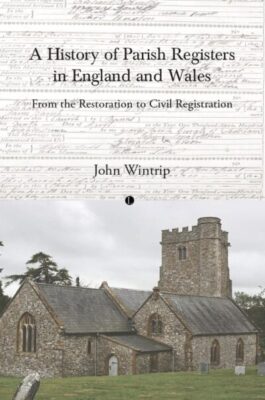
  1. Book Review and Author Interview: A History of Parish Registers in England and Wales: From the Restoration to Civil Registration by John Wintrip (The Lutterworth Press, 2026)

    May 8, 2026

    A History of Parish Registers in England and Wales: From the Restoration to Civil Registration by John Wintrip (The Lutterworth Press, 2026)

    As expected from a genealogist of John Wintrip’s calibre and experience, A History of Parish Registers in England and Wales is a work of meticulous research and impressive detail. Even readers already familiar with the history of parish registers will find much that is new here. Who knew, for example, that one of the earliest diocesan initiatives to improve parish registers in the late eighteenth century emerged from the Diocese of Carlisle?

    Wintrip makes potentially dense material highly accessible through a varied layout, generous use of examples, and an excellent range of primary sources. The book is also supported by a detailed index and glossary, making it a practical reference work as well as a scholarly study.

    The chapters move systematically through the development of parish registers, beginning with their origins before 1660 and tracing their evolution through major legislative and diocesan reforms up to civil registration in 1837. I love the use of the regional case studies (Carlisle, York, Chester, St Asaph, Norwich, Salisbury, and Durham), which are enjoyable to read, while also showing just how varied local practice could be across England and Wales.

    This is a valuable book for beginners, experienced family historians, and professional researchers alike. More than simply a guide to registers, it offers a wide-ranging view of the parish system itself and the socio-historical framework within which records were created and maintained. As Wintrip notes, the study is concerned solely with the parish registers of the Church of England. But, by retaining this tight focus, the work ultimately brings fresh depth to the record-keeping culture that underpins English family history research from the sixteenth century onwards.

    Interview with John Wintrip

    What was your background before writing this book?

    After graduating in chemistry in 1973, my first career was as a science librarian, working mainly in universities. Having developed a keen interest in my own family history during the 1990s, the chance to take early retirement in 2007 provided an opportunity to pursue a new career as a professional genealogist. In anticipation of this possibility, I had already gained an IHGS Higher Certificate in 2006 and was subsequently awarded a Diploma in Genealogy in 2008. I was admitted as a Member of AGRA in 2009.

    Having long been aware of the dearth of books providing guidance on researching before 1837, and after several years as a professional genealogist, I subsequently wrote two books covering this period. While writing these books, I became particularly interested in the origins of the detailed parish registers introduced in several dioceses and a few parishes elsewhere in the late eighteenth century, so decided to investigate this topic as a personal project after retiring from professional practice, presenting my findings in the form of an IHGS Licentiateship dissertation in 2019. I have continued to investigate features and idiosyncrasies of parish registers for which there is little or no explanation in the published literature, and have written several articles for the Genealogists’ Magazine.

    Why did you choose parish registers as the subject of your latest book?

    The most recent book to cover the history of parish registers in any detail was published in 1968 (General Sources of Births, Marriages and Deaths before 1837, by D.J. Steel; volume 1 of the National Index of Parish Registers). Several new discoveries in relation to the parish registers of the long eighteenth century have subsequently been made, initially by archivists, local historians and historical demographers, and more recently by me. I therefore began to think about bringing together what is now known about parish registers during this period into a coherent narrative, which could potentially be published in the form of a book. I was very fortunate that Lutterworth Press were sufficiently intrigued by my proposal to offer me a contract.

    You have examined changes in official records in England and Wales during a period of considerable transformation. Which element did you find most noteworthy?

    I think the most noteworthy element is the exceedingly slow pace of reform. Civil registration was introduced in France in 1792, for example. When it was finally introduced in England and Wales in 1837, the existing system of parochial registration had been widely acknowledged as not fit for purpose for the best part of a century.

    Few people are aware that the system for recording births, marriages and deaths in England and Wales could have been completely transformed in the mid-eighteenth century if voting in Parliament had taken a different course. Bills proposing considerable improvements in the recording of births, marriages and deaths were introduced in 1753 and 1758, but both were rejected. It is interesting – although ultimately frustrating and futile – to consider how things might have developed had one of these Bills been enacted.

    You highlight several significant individuals throughout the book. Was there one who stood out to you in particular?

    Yes, Shute Barrington (1734-1826), who served as Bishop of Durham from 1791 until his death, and appears to be the only bishop to have taken a personal interest in the improvement of parochial registration. He was already engaging with this issue while serving as Bishop of Llandaff, communicated his concerns and proposals to clergy in the Diocese of Salisbury in 1789, and finally introduced his unique and innovative system for registering baptisms and burials in the Diocese of Durham in 1798, where it was followed in virtually every parish until standard printed registers were introduced in 1813.

    Although Barrington’s initiative was relatively short-lived in comparison with similar initiatives in other dioceses, I consider his forms of entry to have been the most efficacious, as they achieved a fine balance between the ability of informants to provide the details being asked for and the usefulness for posterity of the information being recorded.

    What are your future plans? Can we expect more books from you?

    Having begun my research into the history of parish registers almost a decade ago, I have no plans to write any more books. Although I think there is a clear need for an up-to-date work on the history of non-Anglican registers, I have neither the inclination nor the motivation to embark on such a project at my stage in life. However, there are a few topics in relation to parish registers, which I have touched on in my book, that I would like to explore further, such as the apparent divergence in meaning between ‘baptism’ and ‘christening’ in some parish registers towards the end of the eighteenth century. I may write further articles for the Genealogists’ Magazine if I make any significant discoveries.


    John Wintrip began investigating his family history in the 1990s. Following an earlier career as a science librarian and a decade of practising as a professional genealogist, he turned his attention to investigating features and idiosyncrasies of parish registers for which he had found no satisfactory explanation in the recent published literature, receiving a Licentiateship in Heraldry and Genealogy for his dissertation on this topic in 2019. He has been a Member of the Association of Genealogists and Researchers in Archives (AGRA) since 2009.

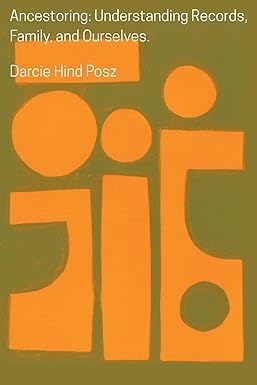
  2. Book Review and Author Interview: Ancestoring: Understanding Records, Family, and Ourselves by Darcie Hind Posz

    April 3, 2026

    Ancestoring: Understanding Records, Family, and Ourselves by Darcie Hind Posz (Genealogical Publishing Company, 2026)

    In 1926, Carl Jung concluded a lecture to a literary society in Augsburg with the claim that the archetypes buried in our collective unconscious carry ‘the deposit of man’s whole ancestral experience,’ which genealogist Hank Jones later interpreted in Psychic Roots as meaning that ‘we inherit the wisdom of the experience of our ancestors without ourselves having personal experience.’ This is one of many thought-provoking influences and references that appear in this exciting new book from accomplished US genealogist and writer Darcie Hind Posz. Its eighteen chapters are alive with ideas and inspiration. I found it fascinating and have found myself returning repeatedly, pondering how I can apply the thoughts and examples to my own family history. Completely different from many of the genealogy books out there, Ancestoring brings influences from the current memoir or ancestral self-discovery vein, which has prevailed in publishing in recent years. 

    In her preface, Hind Posz defines Ancestoring as, ‘The observation and collection of methodologies, theories, and solutions to everyday items as related to genealogy.’ The entire book involves fresh ideas and inspires the reader to look anew at their own family tree and the assumptions they’ve made about their ancestors. From its title to the use of examples (the section on source analysis, in particular, is revelatory) and quotations from a wide range of genealogical papers, this is something original and illuminating. 

    The book’s dedication quotes from William B Saxbe, Jr., who refers to ‘thoughtful genealogists’. That appears to be the target audience here. If you consider yourself a ‘thoughtful genealogist’, then, without doubt, this is the book for you.

    Interview with Darcie Hind Posz, CG®, FASG

    What was your background before writing this book? 

    I have been working in libraries and as a genealogist for twenty years. I have been a verifying genealogist for several lineage societies. I have worked as an editor for a publication. I have volunteered. When I was not doing that, I was finding time to write, which I enjoy. 

    I hadn’t heard the term “Ancestoring” before this. How did you come up with the title of the book? 

    At first, I wanted a field guide or something like a field guide for all of these methods that I had used over the years that worked for me. I liked ancestoring to describe it because it was not strict, but a bit whimsical and in that grey area. I had the idea in 2017 originally to use pictures to describe how I visualized solving genealogical problems I carried with me, and I had begun to collect notebooks full of doodles. During the pandemic, I came back to the notebooks because I was running out of projects. It kept getting bigger, so I made myself commit to finding a publisher open to a book that is hard to describe. 

    This is your fourth book. How does it differ from your previous titles? 

    This book is different because I feel like I got to keep my voice in it. When you write a genealogy, you are an observer of a family; your tone is kept in check with the documents formulating the narrative. When you write about a region, again, you are kept in check by the resources you are discussing. Both are pointing the reader to resources and then a family narrative to evaluate and observe. But getting to the part where you have a final family narrative to publish or distribute is not that simple. There are rabbit holes, diatribes, blind alleys, and other things (like losing an entire line in the pedigree), where they have no room in the final product. I wanted to show that and work in progress because what didn’t work for my genealogical problem may work for someone else’s. 

    In Part Two (Understanding Families), you write: “Rather than judging our subjects, which will likely flatline the part of our brain we use to understand them, observe and evaluate their actions.” This approach strongly resonates with my own work in personal family history research, as well as what I encourage in my clients. Do you think genealogists are shifting in how they approach their ancestors (e.g. those considered “black sheep”) compared to how family history was typically handled in the recent past? 

    I hope they are. It is hard. It would be nice to have deeper conversations about topics like this. It is easy to judge swiftly when an ancestor does something and to label it. But we need to think of those we study not as something like a document. As their lifetime progressed, they shifted and changed. Think about how you have done things during your life. Maybe you did something that seemed like a good idea at the time, and now you regret it. We all do it. Those we study in genealogy did the same. That is why I liked to frame it as withholding judgment, so that you do not know yet if they are the good or bad person in the story. Just watch longer. 

    In Part Three (Understanding Ourselves), you touch on genetic genealogy, writing that, “DNA will overturn many previously proven or established pedigrees.” What is the most powerful discovery you have made through DNA research? 

    I was sure of my lineage until DNA overturned it, and although DNA is this wonderful evidence available now, just like documentation, we will have to wait as more of it becomes available by waiting for more people to take DNA tests and providing a larger pool for those of certain ethnicities. I will spend the rest of my life combing through match lists to see if there is a hint of that line! Since it will be a lifelong process, I will need to keep up-to-date on the technology and methods for it. 

    What are your future plans? Can we expect more books from you?  

    More books, of course! 🙂

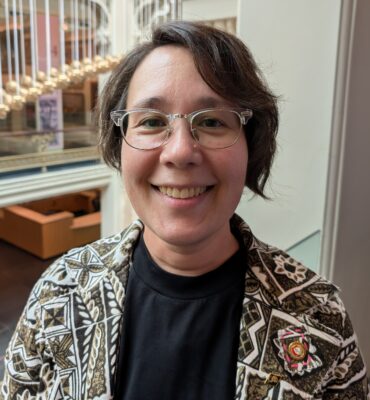
    Darcie Hind Posz, CG®, FASG, is an author, genealogist, and researcher, and has been a board-certified genealogist since 2013. In 2023, she was elected a Fellow of the American Society of Genealogists. Darcie Hind Posz is an author, genealogist and researcher. Posz authored three other books: Chicago Stones: A Genealogy of Acquisition, Influence & Scandal; Recast: Vital Events Published in Variety in 1918 and 1919; and Research in Hawaii, part of the National Genealogical Society’s Research in the State series, was published in 2024. Her extensive bibliography can be found at her website, darciehindposz.com. 


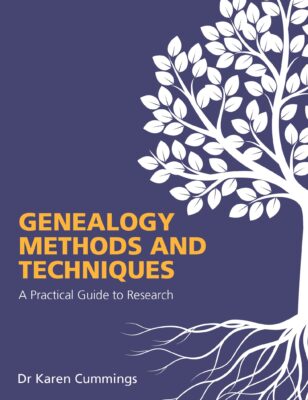
  3. Book Review and Author Interview: Genealogy Methods and Techniques: A Practical Guide to Research by Dr Karen Cummings

    March 27, 2026


    Genealogy Methods and Techniques: A Practical Guide to Research by Dr Karen Cummings (Crowood Press, 2026)

    At the turn of the millennium, I regularly trekked to the Family Records Centre in Islington to pore over census microfilms and wrestle hefty GRO index books from awkward shelves. This Christmas, at a party in Scotland, a conversation about family history led me to pull up the same information on my smartphone in seconds.

    That contrast says it all. Genealogy has changed dramatically, and this book reflects that shift. It offers a clear guide to modern research methods for both beginners and more experienced family historians.

    While fully aware of technological advancements, Karen is careful to emphasise the importance of offline methodology. She encourages readers to think critically about which sources might answer their research questions before “jumping onto the internet.”

    The chapters cover a comprehensive range of topics, including: laying and checking the foundations; getting organised; evaluating evidence; writing effectively; developing good search techniques; research planning; pulling it all together; genealogy standards and problem-solving; DNA testing; and reflections on where the field stands today.

    Overall, this book deserves a place on every beginner’s shelf and is strongly recommended for serious or professional genealogists aiming to work at a high level, particularly when it comes to organisation and methodological rigour.

    Interview with Dr Karen Cummings

    What was your background before writing this book?

    I started my career in the pharmaceutical industry as a registered Pharmacist with a PhD in pharmaceutical development. Like many people, I started looking into my own family history and was soon “bitten by the bug”, and it became a passion. I decided to take qualifications in genealogy to build my skills and prove to myself that it was something I could do professionally. I’ve now been working as a professional genealogist for over 15 years.

    What inspired you to write Genealogy Methods and Techniques?

    I’ve always been interested in the “how” of researching as much as “where” to look, possibly a result of a background in scientific research. I quickly realised that there was very little written on this topic, particularly using examples from England and Wales, and I wanted to help others get the most out of their research and be more confident in their family tree.

    Who did you write this book for?

    Everyone! Much of the current writing on genealogy research methods is aimed at professionals working to published standards, but I wanted everyone to be able to get the most from their research. So you can read this book when you are getting started, when you have been doing your own research for decades, or when you have been working as a professional genealogist, and still find tips and tricks to guide you.

    What do you hope readers will do differently in their research after reading the book?

    One of the common issues I encounter is family historians saying they wish they were more organised in their approach, in how they store their research and in their note-taking, wasting time each time they have an opportunity to do some research, trying to work out where they had got to and what comes next. I’m hoping readers will be able to get more organised and adopt a more methodical approach, which ultimately saves them time, so they can get on with more exciting new research. I also hope I can help them build confidence in their research and their ability to tackle research hurdles.

    What are your future plans? 

    This is the book I have always wanted to write, though there may be some ideas starting to form about other writing projects in the future. I will definitely be writing more articles on methods. Perhaps something on DNA, too?

    Dr Karen Cummings is a qualified and accredited professional genealogist and tutor, with many years of family history research experience. She is the owner of Pharos Tutors, the UK’s leading provider of online family history courses, and is a long-standing Member of the Association of Genealogists and Researchers in Archives (AGRA), where she has served on both the Council and the Board of Assessors. Formerly a registered pharmacist, Karen brings a scientific background to her specialist areas of genealogical research methodology and the use of DNA testing in family history.

  4. Book Review and Author Interview: Too Tall Tilly by Melissa Beardall

    December 23, 2025

    Too Tall Tilly by Melissa Beardall (Hazy May Books, 2025)

    Melissa Beardall has produced her latest children’s book, Too Tall Tilly, with her mother, Rebecca Nichols and illustrator Emma Valenghi. The story focuses on a young girl nicknamed Tilly who feels self-conscious about being the tallest in her class. She daydreams of becoming someone else entirely, until her parents share a treasured book of old family photographs that helps her see the beauty in her own identity and heritage. 

    I have long enjoyed children’s books, and I found this to be an engaging, detailed story with lovely illustrations. I liked the way the parents and community were always so accepting of Tilly, whatever she wanted to do (or be). With its overall message of self-acceptance, the book gently encourages the idea that exploring family history—through photos and stories of ancestors—can help children feel more connected and confident (a topic of great interest to me and something I’ve spoken on previously). For parents, grandparents, or other relatives keen on family history, it offers a subtle, enjoyable way to spark a child’s curiosity about their roots, perhaps over a festive read-together at Christmas. This charming tale would suit any family hoping to gently introduce young ones to the joys of genealogy.


    Interview With Melissa Beardall

    What was your background before writing this book?

    When I was a young mother, I dreamed of writing a children’s book. The idea always lingered in the back of my mind, but motherhood—and the busyness that comes with it—never truly left room for that dream to take shape.

    Five years ago, I was diagnosed with multiple chronic illnesses that have since left me mostly bedridden. During that time, my mom approached me about writing a children’s book based on my own story. Suddenly, a lightbulb went off, and I couldn’t write fast enough. After many late nights and countless exchanged ideas, our first book was born: Twirl with Me, Mama! Helping a Child Understand a Loved One with a Chronic Illness.

    That story reflected my experience as a young mother raising eight children while living with undiagnosed chronic illnesses and feeling deeply inadequate. Our goal was to validate families living in nontraditional circumstances and the complex emotions that often accompany them.

    After Twirl with Me, Mama!, we knew we had more to share, and that is when Too Tall Tilly came to life. Had I remained healthy, I likely never would have begun writing. Writing has given me something to look forward to and a way to stay mentally engaged and I feel like I can contribute, despite my less-than-ideal circumstances.

    What inspired you to write “Too Tall Tilly”?

    When you have a lot of time on your hands, it can become the perfect springboard for imagination to blossom. My mom and I want to write stories that help children navigate today’s world, which can often feel overwhelming and challenging. We have all, at some point, wanted to be someone—or something—else, and that feeling felt like the perfect foundation for a story.

    We wanted to create a character who is creative and sweet, yet held back by something that prevents her from fully being herself. Tilly’s name and height came to me in a brief flicker of inspiration. My mom then introduced the idea of Tilly’s journey, leading her to distant relatives and the meaningful connection she would discover with them. Our ancestors have helped build the world we live in today, and we wanted to honor them in a way that children could understand and relate to. This is where Tilly discovers Great Aunt Matilda and begins to connect with her own history.

    The following line stands out to me:

    “Great Aunt Matilda looked just like me! She stood a full head taller than Grandma. She had the same dark hair and the same big, toothy smile as I have.”

    That scene is powerful because it’s the turning point of the story. For the first time, Tilly doesn’t see her height as a problem—she sees it as a connection. It transforms something she was teased for into something meaningful and proud.

    I also love the ending line:

    “I can do or be anything, but I’ll always be me. Tilly!”

    It beautifully wraps up the message of the story—confidence doesn’t come from changing yourself, but from understanding and accepting who you are. Family history can be an important contributor to learning these life lessons.

    Why did you feel like this was an important story to tell?

    This felt like an important story to tell because it shows how a child can struggle with feeling different and not fully accepting who they are. Tilly changes her name every day because she is trying to find an identity that makes her feel special and confident, especially after being teased for being tall. Many children can relate to feeling uncomfortable about something that makes them stand out.

    The story is also important because it teaches that understanding where you come from can help you feel proud of who you are. I love when Tilly learns about her Great Aunt Matilda and her accomplishments. It is through these family connections that she realizes that her height and her name are part of something meaningful. In the end, the story encourages young readers to be creative and imaginative, yet to accept themselves, be proud of their uniqueness, and know that they can stand tall, just as they are.

    What’s next for you and writing?

    We have another book that is ready to be illustrated. The main character is a mouse and its message is timeless— that in a big world, we all have an important part to play. We are all apart of the music.

    This may become a series in time. I look forward to finding out for myself what the future may hold. My path has been different than I thought it would be, and that’s okay. Sometimes the greatest blessings are the result of something you do that is really hard. I trust that there are great things to come and though I may limited, the possibilities are limitless.

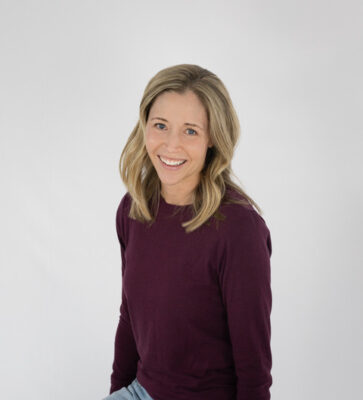
    Melissa Beardall is the co-author of the cherished picture book Twirl with Me, Mama!, a heartfelt collaboration with her mother, Rebecca. She lives in a cozy mountain valley in Utah with her husband, Jason. Together, they have eight wonderful kids and three grandbaby princesses. Melissa is a big fan of good books, scenic hikes, and making sweet memories with her family.

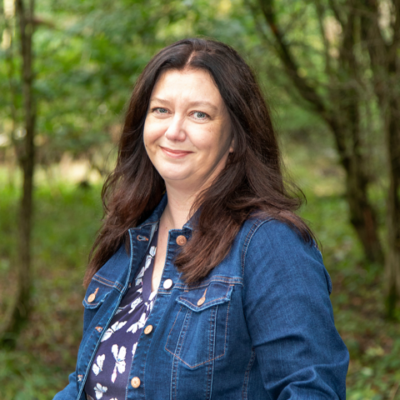
    Rebecca Nichols is an accomplished author and proud mother of five, as well as a grandmother to 24 wonderful grandchildren. Currently residing in Utah with her husband, Rebecca is thrilled to be writing her third children’s book alongside her talented daughter, Melissa. In her free time, she enjoys reading and exploring warm destinations, enriching her life with new experiences and stories. Now retired, Rebecca channels her passion for storytelling into creating engaging narratives for young readers.

  • Genetic Genealogy – Biogeographical Ancestry

    March 29, 2025

    Biogeographical ancestry (BGA) is now the preferred and more accurate term for what DNA testing companies have traditionally called “ethnicity.” Another commonly used term is BioAncestry.

    Until recently, genetic genealogists—including myself—referred to these findings as “ethnicity results.” To align with current terminology, I am updating this blog with the preferred terms and sharing my latest results.

    The five most popular DNA testing sites for ancestry and health insights are AncestryDNA, 23andMe, MyHeritage DNA, FamilyTreeDNA, and Living DNA.

    Ancestry

    Ancestry’s most recent BGA update was in July 2024, and my results align well with my documented family history.

    I was especially pleased to see the West Midlands highlighted, as this is where most of my maternal ancestors lived in recent centuries. The Welsh ancestry reflects both my paternal and maternal heritage, while the 10% Ashkenazi Jewish matches what I would expect from my great-grandfather.

    The 3% Irish may be linked to either my Scottish or West Welsh ancestors, but the Icelandic component appears to be an anomaly—I suspect it will disappear in the next update.

    23andMe

    Like Ancestry, 23andMe has accurately highlighted my West Midlands heritage. Even better, it identifies my mitochondrial haplogroup as T2b, which aligns with my known ancestry.

    23andMe categorizes my Ancestral Composition as European, further dividing it into Northwestern European and Ashkenazi Jewish, with percentages that match my documented family history.

    One advantage of 23andMe is its detailed regional breakdown beyond just the West Midlands. It identifies four distinct British regions in my ancestry:

    North Central England

    Defined as “north central England and parts of the West Midlands, including Staffordshire, Leicestershire, West Midlands, Cheshire, and Derbyshire.”

    • Common maternal haplogroups: H1, T2b, and H1c.

    • Since my maternal haplogroup is T2b, this fits well with my ancestry.

    Wales

    Defined as “Wales and England’s Welsh border counties,” which includes parts of the West Midlands.

    • Common maternal haplogroups: J1, H1, and T2b.

    • Again, T2b is listed, reinforcing my maternal connection to this region.

    West Midlands

    Defined as “Shropshire, Staffordshire, Worcestershire, Herefordshire, and Warwickshire,” though most people in this genetic group have ancestry near Birmingham.

    • Common maternal haplogroups: J1b1a, R0, and H1.

    • Interestingly, T2b is not listed here, even though my maternal line is from the West Midlands as far back as I have traced. However, since T2b appears in both the North Central England and Wales groups, it suggests my maternal ancestors may have been in this broader area for centuries. More research is needed!

    England & Southern Uplands of Scotland

    This category covers all of England and parts of upland Scotland.

    • Common maternal haplogroups: U5a1a1, H5a1, and H1b.

    On my paternal side, my Ashkenazi Jewish ancestry does not come from my Y-DNA line but from a different paternal branch. We know that my 2x great-grandfather, Abraham Israel, came from Poland, and our family has strong ancestral ties to Ukraine. These results fit well with what we know so far.

    MyHeritage

    MyHeritage has once again accurately identified my European origins, while also providing a more detailed breakdown of my Ashkenazi ancestry.

    MyHeritage claims to offer the most diverse and detailed Jewish ethnicity analysis available, with five Jewish ethnic groups and 55 Genetic Groups of Jewish origin.

    European Breakdown

    My results show:

    • 43.3% Scottish & Welsh

    • 30.0% English

    This seems reasonable, especially if the Welsh category includes some of my West Midlands ancestry. However, I find it odd that Scottish and Welsh are grouped together.

    The biggest surprise in this update is the unexpected appearance of:

    • 6.5% Breton

    • 5.1% Dutch

    These results seem questionable, and I suspect they may disappear in future updates.

    Ashkenazi Jewish Breakdown

    Unlike other testing companies, MyHeritage provides a more nuanced interpretation of my Jewish ancestry, dividing it into:

    • 4.6% Ashkenazi Jewish (Central Europe)

    • 3.0% Ashkenazi Jewish (Western Europe)

    • 1.1% Ashkenazi Jewish (Eastern Europe)

    This level of detail helps clarify regional origins within my Ashkenazi lineage, which aligns with what I know about my family’s history.


    Family Tree DNA

    My FamilyTreeDNA myOrigins® Version 3 Results

    Here’s a look at my latest myOrigins® Version 3 results from FamilyTreeDNA. As expected, my ancestry is 100% European, but the breakdown offers some different results from the other testing companies.

    Western European Ancestry

    • England, Wales, and Scotland – 67%

    • Ireland – 19%

    This aligns well with my known family history. The grouping of England, Wales, and Scotland together makes it harder to pinpoint specifics, but given my strong West Midlands roots, I assume much of this percentage is from that region. The 19% Irish is also intriguing—it could be linked to either my Scottish or West Welsh ancestors, though more research is needed to confirm.

    European Jewish Ancestry

    • Ashkenazi Jewish – 9%

    This fits closely with what I already know about my Ashkenazi Jewish heritage, which comes from my great-grandfather’s line. It’s interesting to see this as a single category here, whereas other testing companies sometimes divide Ashkenazi ancestry into more specific regions.

    Eastern European Ancestry

    • West Slavic – 4%

    This is an interesting addition. My Ashkenazi Jewish ancestors had strong Polish and Ukrainian ties, so it makes sense that a Slavic percentage appears in my results. It would be interesting to see if this changes in future updates.

    Overall, these results are a good match for my documented genealogy, though the broad regional groupings leave some room for interpretation. It will be interesting to compare this with future updates and results from other DNA testing companies!

    LivingDNA

    My Living DNA results provide a detailed breakdown of my British and Irish heritage, with 88% of my ancestry linked to regions across Great Britain and Ireland. Unlike some other testing companies, Living DNA offers a more regionalized view, identifying specific areas where my ancestors may have lived.

    British Isles Breakdown

    The largest proportion of my ancestry is from South Central England (18.4%), which aligns with my known family history. There are also notable contributions from Northumbria (10.7%), North Wales (9.1%), and South Wales (7.8%), suggesting a mix of English and Welsh ancestry. The Northumbrian doesn’t fit with documented research nor the results from other companies, but the Welsh is more accurate.

    Other regions appearing in smaller percentages include:

    • Devon (5.2%) and Cornwall (2.6%), possibly indicating connections to the West Country.

    • Cumbria (3.8%), which may be linked to the English-Scottish border region.

    • South Yorkshire (1.2%), a relatively small proportion but still notable.

    No Jewish ancestry has been identified in this breakdown, despite its appearance in results from other companies. It is unclear where it is.

    Germanic Ancestry

    Unlike previous tests, Living DNA has identified a 12% Northwest Germanic component. Could this be connected to the missing Ashkenazi ancestry? Or could it reflect historical migration into Britain, possibly from Anglo-Saxon or Viking populations>

    Conclusions

    Overall, my updated BGA results offer a detailed view of my British ancestry, highlighting multiple regional connections and providing valuable insights into broader ancestral patterns. However, there is still room for improvement, and I look forward to future updates.


  • « Earlier articles

    Search Blog


    Categories

    • Black Country
    • Book Reviews
    • Book Writing
    • Camden
    • Chelsea
    • Children
    • Crime
    • DNA
    • Family History
    • Genealogy
    • Genetic Genealogy
    • History
    • Immigration
    • India
    • Italy
    • Jane Carlyle
    • London
    • London history
    • Memoir
    • Mid century history
    • Photo Restoration
    • Social History
    • Technology
    • Thomas Carlyle
    • USA
    • West Midlands
    • Women's History
    • Worcestershire

    Recent Comments

      • Baby Name Namesakes: Harriet Beecher Stowe in the UK – Baby Name Blog - Nameberry on NAMING NAPOLEON: how exploring first names can give an insight into Victorian world history.
      • Baby Name Namesakes: Harriet Beecher Stowe in the UK – Baby Name Blog - Nameberry on Naming for Empire
      • Emma Jolly on Writers’ Blog Tour
      • Deepa on Writers’ Blog Tour
      • Emma Jolly on Historic Newspapers

    Blog Archive

    August 2026
    M T W T F S S
     12
    3456789
    10111213141516
    17181920212223
    24252627282930
    31  
    « May    

    Tags

    • 1911 census bolton wanderers british library camden council camden local studies census charles dickens christmas christmas carol crimea eliza fay em forster emma jolly exhibition family history family history for kids genealogy grandparents history india interview relatives joe smith john richardson lma london london metropolitan archives Manchester museum of london names nhs nhs bill nun nurses pancras record their stories social history st pancras theatre history victorian history war

    Latest From Emma's Blog

    Book Review and Author Interview: A History of Parish Registers in England and Wales: From the Restoration to Civil Registration by John Wintrip (The Lutterworth Press, 2026)

    A History of Parish Registers in England and Wales: From the Restoration to Civil Registration by John Wintrip (The Lutterworth Press, […]

    [Read more]

    Book Review and Author Interview: Ancestoring: Understanding Records, Family, and Ourselves by Darcie Hind Posz

    Ancestoring: Understanding Records, Family, and Ourselves by Darcie Hind Posz (Genealogical Publishing Company, 2026) In 1926, Carl Jung concluded a […]

    [Read more]

    From Twitter

    Tweets by emmajolly
    Member of The Society of Authors Member of The Association of Genealogists and Researchers in Archives Graduate of the Institute of Heraldic and Genealogical Studies Canterbury Member of the Society of Genealogists Pharos Tutors
    Follow Emma on Twitter Follow Emma on Instagram Connect with Emma on LinkedIn Connect with Emma on Medium
    Copyright © 2026 Emma Jolly     Terms and Conditions / Privacy Policy
    website by beachshore