Blog

After their arrival in India, Eliza and her husband settled in Calcutta. It was there that she was living at the Christmas of that year. Eliza detailed her first Christmas in India in a letter to her sister on 27th January 1781.

Emma Jolly, in the article A British Christmas in India 1780

Emma Jolly writer, historian, genealogist
  1. Book Review and Author Interview: Ancestoring: Understanding Records, Family, and Ourselves by Darcie Hind Posz
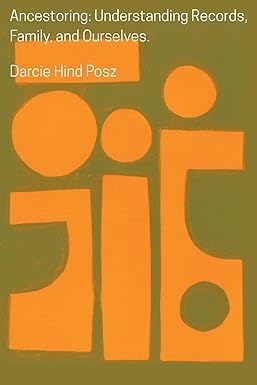
    Ancestoring: Understanding Records, Family, and Ourselves by Darcie Hind Posz (Genealogical Publishing Company, 2026)

    In 1926, Carl Jung concluded a lecture to a literary society in Augsburg with the claim that the archetypes buried in our collective unconscious carry ‘the deposit of man’s whole ancestral experience,’ which genealogist Hank Jones later interpreted in Psychic Roots as meaning that ‘we inherit the wisdom of the experience of our ancestors without ourselves having personal experience.’ This is one of many thought-provoking influences and references that appear in this exciting new book from accomplished US genealogist and writer Darcie Hind Posz. Its eighteen chapters are alive with ideas and inspiration. I found it fascinating and have found myself returning repeatedly, pondering how I can apply the thoughts and examples to my own family history. Completely different from many of the genealogy books out there, Ancestoring brings influences from the current memoir or ancestral self-discovery vein, which has prevailed in publishing in recent years. 

    In her preface, Hind Posz defines Ancestoring as, ‘The observation and collection of methodologies, theories, and solutions to everyday items as related to genealogy.’ The entire book involves fresh ideas and inspires the reader to look anew at their own family tree and the assumptions they’ve made about their ancestors. From its title to the use of examples (the section on source analysis, in particular, is revelatory) and quotations from a wide range of genealogical papers, this is something original and illuminating. 

    The book’s dedication quotes from William B Saxbe, Jr., who refers to ‘thoughtful genealogists’. That appears to be the target audience here. If you consider yourself a ‘thoughtful genealogist’, then, without doubt, this is the book for you.

    Interview with Darcie Hind Posz, CG®, FASG

    What was your background before writing this book? 

    I have been working in libraries and as a genealogist for twenty years. I have been a verifying genealogist for several lineage societies. I have worked as an editor for a publication. I have volunteered. When I was not doing that, I was finding time to write, which I enjoy. 

    I hadn’t heard the term “Ancestoring” before this. How did you come up with the title of the book? 

    At first, I wanted a field guide or something like a field guide for all of these methods that I had used over the years that worked for me. I liked ancestoring to describe it because it was not strict, but a bit whimsical and in that grey area. I had the idea in 2017 originally to use pictures to describe how I visualized solving genealogical problems I carried with me, and I had begun to collect notebooks full of doodles. During the pandemic, I came back to the notebooks because I was running out of projects. It kept getting bigger, so I made myself commit to finding a publisher open to a book that is hard to describe. 

    This is your fourth book. How does it differ from your previous titles? 

    This book is different because I feel like I got to keep my voice in it. When you write a genealogy, you are an observer of a family; your tone is kept in check with the documents formulating the narrative. When you write about a region, again, you are kept in check by the resources you are discussing. Both are pointing the reader to resources and then a family narrative to evaluate and observe. But getting to the part where you have a final family narrative to publish or distribute is not that simple. There are rabbit holes, diatribes, blind alleys, and other things (like losing an entire line in the pedigree), where they have no room in the final product. I wanted to show that and work in progress because what didn’t work for my genealogical problem may work for someone else’s. 

    In Part Two (Understanding Families), you write: “Rather than judging our subjects, which will likely flatline the part of our brain we use to understand them, observe and evaluate their actions.” This approach strongly resonates with my own work in personal family history research, as well as what I encourage in my clients. Do you think genealogists are shifting in how they approach their ancestors (e.g. those considered “black sheep”) compared to how family history was typically handled in the recent past? 

    I hope they are. It is hard. It would be nice to have deeper conversations about topics like this. It is easy to judge swiftly when an ancestor does something and to label it. But we need to think of those we study not as something like a document. As their lifetime progressed, they shifted and changed. Think about how you have done things during your life. Maybe you did something that seemed like a good idea at the time, and now you regret it. We all do it. Those we study in genealogy did the same. That is why I liked to frame it as withholding judgment, so that you do not know yet if they are the good or bad person in the story. Just watch longer. 

    In Part Three (Understanding Ourselves), you touch on genetic genealogy, writing that, “DNA will overturn many previously proven or established pedigrees.” What is the most powerful discovery you have made through DNA research? 

    I was sure of my lineage until DNA overturned it, and although DNA is this wonderful evidence available now, just like documentation, we will have to wait as more of it becomes available by waiting for more people to take DNA tests and providing a larger pool for those of certain ethnicities. I will spend the rest of my life combing through match lists to see if there is a hint of that line! Since it will be a lifelong process, I will need to keep up-to-date on the technology and methods for it. 

    What are your future plans? Can we expect more books from you?  

    More books, of course! 🙂
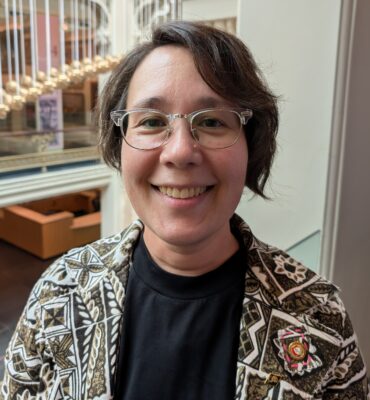
    Darcie Hind Posz, CG®, FASG, is an author, genealogist, and researcher, and has been a board-certified genealogist since 2013. In 2023, she was elected a Fellow of the American Society of Genealogists. Darcie Hind Posz is an author, genealogist and researcher. Posz authored three other books: Chicago Stones: A Genealogy of Acquisition, Influence & Scandal; Recast: Vital Events Published in Variety in 1918 and 1919; and Research in Hawaii, part of the National Genealogical Society’s Research in the State series, was published in 2024. Her extensive bibliography can be found at her website, darciehindposz.com


  2. Book Review and Author Interview: Angel Meadow by Dean Kirby

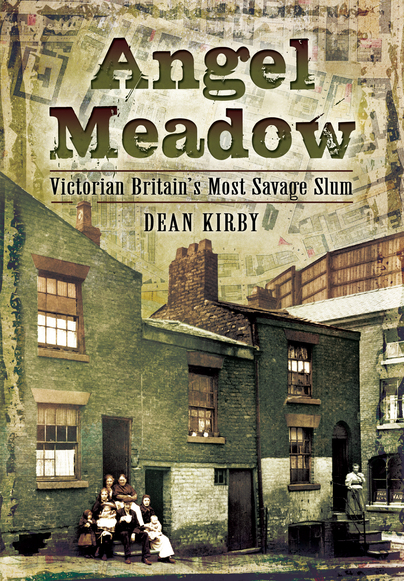
    Angel Meadow

    Angel Meadow: Victorian Britain’s Most Savage Slum by Dean Kirby (P&S History, 2016)

    Dean Kirby’s immersive exploration of Manchester’s Angel Meadow slum in the Victorian era is a compelling journey into one of the most notorious and dangerous neighbourhoods of the Industrial Revolution. In his meticulously researched book, Kirby, drawing on his journalistic background, vividly resurrects the scenes and characters that define this grim chapter in history.

    The book is thoughtfully structured around real events, offering readers a glimpse into the shocking and colourful stories that unfolded in Angel Meadow. Kirby’s dedication to historical accuracy is evident, as he taps into a diverse range of sources, including newspaper accounts, police reports, teachers, missionaries, and magistrates. This thorough approach results in a comprehensive historical record that becomes an essential resource for anyone interested in the lives of those who inhabited this bleak corner of the northern metropolis.

    What sets Kirby’s work apart is not only its historical depth but also its connection. This project is a labour of love for the author, inspired by the experiences of his ancestor, William Kirby, a farm labourer who fled Ireland’s Great Hunger only to face the grim reality of the industrial north.

    The narrative is enriched with a glossary of Angel Meadow slang, providing a linguistic window into the past, and supplemented by a bibliography, research notes, and a detailed index. These elements contribute to the book’s value as both an engaging read and a scholarly reference.

    In summary, Dean Kirby’s book on Angel Meadow is a masterful blend of historical documentation and personal passion. It not only brings to life a vivid and dangerous Victorian slum but also honours the author’s familial connection to the tumultuous events that unfolded in this dark corner of Manchester’s past.

    Interview with Dean Kirby

    What was your background before writing this book?  

    I was born and grew up in Manchester and am very proud of the city and fascinated by its history. Manchester was the first industrial city and played a significant role in the creation of the modern world. My dad has always told me stories about Ancoats, the inner city district where he lived as a young lad, and we would spend hours in Manchester Central Library in the 1980s researching our family history – before genealogy was fashionable – using the old, dimly-lit microfilm readers that genealogists used before records were digitised and which were probably really bad for your eyes. After university, I became a journalist and I’ve spent most of my career working in Manchester – going out into communities and talking to ordinary Mancunians about what was happening in their lives – which has given me an even greater appreciation for my home city and its people. The book happened really because these two things – my family history and my passion for the city and its history – came together quite dramatically in 2016.  

    Your ancestor William Kirby lived in Angel Meadow. Was it solely the discovery of his residence there that inspired you to write about Victorian Britain’s most challenging slum, or were there other motivating factors?

    I had been researching my Irish ancestor William Kirby, my 3 x great-grandfather, on and off since those early days in the library with my dad. William was a farm labourer from County Mayo who arrived in Manchester in the 1860s. Like a lot of poor Irish immigrants at that time, he lived with his family underground in a cellar. Using maps, rate books and other records, I eventually managed to locate the site of his house in a car park in Angel Meadow, where I used to park my car because it was convenient for the Arndale Centre. In Manchester, when slum clearances took place after the Second World War, the houses were simply backfilled into cellar holes and sealed over with concrete. As the city centre is largely flat, a lot of that land was turned into surface car parks which are only just now being redeveloped. 
    One night in 2016, I was walking past the car park where Williams’ house had been with my wife as we went to a Noel Gallagher gig at Manchester Arena and noticed that, amazingly, there was a fence up and a big sign saying “archaeologists at work”. The next day I went back and told them my story. They invited me inside to look at their finds and later let me bring along my dad to climb down a ladder into the cellar holes and touch the bricks of William’s fireplace. They let me take the brick home and I’ve kept it. It still has soot on it from the fire that would have kept him warm on a winter’s day. A death certificate showed that one of William’s children, also called William, died in that house from a fever aged just two weeks old. It says something about the horrible living conditions there, but it also affected the archaeologists, they said, because that’s how long their dig lasted – the same number of days as baby William’s short life. 

    Visiting the house was a hugely poignant moment for me. As family historians, we all spend our time searching for pieces of paper that will give us a glimpse of how our ancestors lived, but in that moment, we were able to walk right through the front door. That moment inspired me to write the book about the district where William lived and to go on to do a doctorate in urban history – researching the Victorian housing conditions in the same area of Manchester. It means I’ve been researching that small area of the city for a decade now. I’m still very grateful to the archaeologists who didn’t turn me away when I turned up with what must have seemed a surprising story. Instead, they invited me in and encouraged me, and I’m hoping that my PhD study of Angel Meadow’s housing will give something back to them and help them in their own research going forward.   
     

    Did you have concerns about portraying some of the distressing stories you encountered during your research?

    I did have concerns about portraying some of the distressing stories in the book and there were some that I left out because they were just too unbearable to write about. It was also quite harrowing at times being immersed in those stories during what was four years of research and writing. One story that played on my mind quite a bit was about a woman named Annie Chapman, who was found dead in a privy in Angel Meadow. It’s only a few paragraphs in the book, but her story was so tragic that I thought about her quite a lot while I was writing. One valid criticism of the book was that I didn’t write about the families who lived good, honest lives and never found themselves in trouble with the police or the pages of a newspaper. I totally agree and there’s also an obvious gap in telling the stories of women who lived in working-class districts in the nineteenth century because their stories are often missing from the historical record, or written by men such as police officers and church missionaries who knew nothing really about women’s lives. All I could do, as I was writing about an era which no one is alive to remember, was to use as many different sources as I could find and try my best to portray people’s lives as accurately and fairly as I could. I also felt it was important to treat the people whose stories I was telling with respect and be a voice for them if I was able, as, like my own family who lived in the district, these were real people and the ancestors of modern-day Mancunians. In a way, the book was my attempt to keep alive the stories of those people and to explain what they went through while living in very difficult circumstances.

    Who was the most memorable individual you encountered in your research for the book?

    There were a few memorable people I encountered in my research and some had interesting nicknames such as Cabbage Ann, the Badger, One-Armed Kitty and Jemmie the Crawler. One thing I enjoyed doing was using genealogy techniques to try to work out the real identities of the people behind the nicknames and find out a bit more about their lives. The Badger, for example, was a thief named John Currie and it was said that he could climb down coal chutes to break into houses. By looking at his prison record though, I also found that his distinguishing marks included his neck being bloated and badly scarred by scrofula, an infection of the lymph nodes caused by tuberculosis. It’s a horrible nickname to have given to someone with a medical condition, but in the days before mugshots and fingerprinting the name would have been a way for police officers to identify him in the street. Cabbage Ann’s real name was Ann Powell and she ran a grocer’s shop and a lodging house. She was a notorious thief trainer who taught youths how to be “breech buzzers” or pickpockets. The most memorable person in my research though was a violent character named Henry Burgess, who would go around Angel Meadow attacking passers-by and the police with anything he could lay his hands on. He had 40 convictions to his name including killing an opponent by throwing a paraffin lamp at him and setting him on fire. I was very lucky to find a photograph of Henry in the Staffordshire Gaol image archive, which is a useful resource for historians searching for Victorian criminals who were transported from the North of England to jails in the South such as Dartmoor, Pentonville and Parkhurst. They would stop at Stafford Gaol on the way and have their photograph taken. It was fascinating to see Henry’s piercing eyes peering back at me in the photograph and to notice that on his neck he had a huge scar, which may have been a knife wound that would have put his life in danger before he was stitched up by a surgeon. 

    One of my greatest joys in writing the book is that I have been contacted by lots of people who have found their ancestors in the index and have been in touch to find out more information. I was really lucky to chat with one of Henry Burgess’s descendants recently who wanted help with their genealogy research and I was able to pass on some documents and the photograph. They had been unaware of his past until reading about him in the book and it was a real privilege to chat to them after spending so much time thinking and writing about Henry during my own research. 

    What’s next? Can we expect more books?

    Since writing the book, I have been taking an even deeper dive into Angel Meadow by researching my PhD, which I finished last year. I really enjoyed it but I’m keen now to write another Manchester history book. I am currently doing some research. Beyond that, I’ve started a newsletter telling stories from the streets of Victorian Manchester, which is free to join. I’m also in the process of setting up a genealogy business so I can help more people find their Mancunian ancestors and tell their stories.    

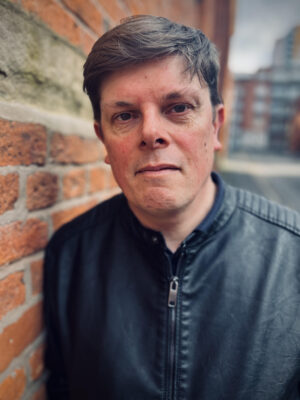
    Dean Kirby is an award-winning investigative journalist whose nominations include being shortlisted for the Orwell Prize for Exposing Britain’s Social Evils for his work on the UK’s fuel poverty crisis. His book on Angel Meadow has been in the Amazon best-seller lists. He now writes a weekly newsletter telling stories from the streets of Victorian Manchester, which can be found at www.manchesterhistory.uk.

  3. Exhibition Review: Suffragettes and Other Feminists in Camden

    “A Stone’s Throw from Westminster: Suffragettes and Other Feminists in Camden” launched this evening at Camden Local Studies and Archives Centre in Holborn with performances, songs, and an introduction by comedian, writer and activist, Kate Smurthwaite.

    Inspired by Camden’s radical feminist past, Suffrage Arts has curated a diverse history of women’s political and social campaigns in the borough across the decades, with the back wall covered in posters from recent times.

    Displays feature a variety of activists who lived locally and made unique contributions to women’s rights. These include Mary Wollstonecraft (who wrote A Vindication of the Rights of Women while living in Store Street), Frances Buss (founder of Camden School for Girls), Millicent Fawcett (led the National Union of Women Suffrage Societies while living in Gower Street), Margaret Bondfield MPCicely Hale, Cicely Hamilton, Ernestine Mills, Olive Hockin, Alice Zimmern (lived in Lissenden Gardens), Charlotte Wilson, and Barbara Castle.

    Barbara Castle (1910-2002), who lived in Belsize Park Gardens.

    Map showing who lived where in the Camden area

    There is a section devoted to the centenary of women lawyers, and another to those associated with the theatre.

    Digital Drama has contributed a section on the Endell St Military Hospital (staffed entirely by women).

    Visit the exhibition for free at Camden Local Studies and Archives Centre, 2nd floor of Holborn Library, 32-38 Theobalds Road, London WC1X 8PA; Tel: 020 7974 3860, web: www.camden.gov.uk/localstudies

    Mon and Tue 10am-6pm, Wed closed, Thu 10am-7pm, Fri 10am-5pm by appointment only, Sat 11am-5pm alternate weeks (23 Jun, 7 Jul, 21 Jul, 4 Aug, 18 Aug, 1 Sept, 15 Sept).

Latest From Emma's Blog

A History of the Census Takers: Recording the Nations by Mish J Holman (Pen & Sword, 2026)

Looking beyond the census returns to explore the lives and personalities of the people who created them A History of […]

[Read more]

Book Review and Author Interview: A History of Parish Registers in England and Wales: From the Restoration to Civil Registration by John Wintrip (The Lutterworth Press, 2026)

A History of Parish Registers in England and Wales: From the Restoration to Civil Registration by John Wintrip (The Lutterworth Press, […]

[Read more]

Member of The Society of Authors Member of The Association of Genealogists and Researchers in Archives Graduate of the Institute of Heraldic and Genealogical Studies Canterbury Member of the Society of Genealogists Pharos Tutors