Blog

I have a personal interest in football history as my great-grandfather’’s cousin, Joe Smith (1889-1971), was one of the best professional footballers of his generation. He is second only to the legendary Nat Lofthouse as Bolton’’s top goalscorer, and his 38 goals in season 1920/21 remain a club record.

Emma Jolly, in the article The National Football Museum

Emma Jolly writer, historian, genealogist
  1. 10 Questions Everyone Should Ask Their Grandparents

    As a child, I was lucky enough to grow up with one set of grandparents and regularly holiday with the others. Although my grandparents were happy to share details of their childhoods, some were particularly reluctant to answer questions about their families. After years of exploring my family tree and making contacts through events and social media, I’ve learned some of the reasons behind their secrets.

    My last surviving grandparent sadly died last year, and now there is no one of that generation left to ask. There is so much I have learned over the years that I wish I could share with my grandparents. My oldest grandparent, Grandpa, died in 1987 when I was ten. He now sits on his mother’s now on the cover of my latest book.

    If I could travel back in time, I would ask completely different questions. But, it’s important to remember that talking with any relatives about their lives requires sensitivity and patience.

    In this guest post, Lily Harris, a freelance writer focused on family relationships looks at how much we have to learn from our elders and discusses ten questions she feels we should all ask.

    10 Questions Everyone Should Ask Their Grandparents

    Memories are an important part of our lives. If you are caring for someone with dementia, you will have a keen appreciation for this.

    Dementia is now ‘one of the fastest growing conditions in the UK that affects the over 65s and is often the most popular condition people associate with the elderly’, according to Helping Hands Homecare. It is a loved one’s loss of memory which is often most upsetting when there is a diagnosis of dementia; and many families only realise that they have missed out on valuable opportunities to ask their elderly relatives about their lives when it is too late.

    Sharing in the experience now of looking through their treasure trove of memories will not only help you to feel closer and more connected, but will also help them to stay in touch with who they have been for as long as possible. Indeed, the Social Care Institute of Excellence has recently published research explaining how the act of reminiscing on the past can be very valuable and therapeutic for people with dementia: ‘[t]ypically, a person with dementia is more able to recall things from many years ago than recent memories, so reminiscence draws on this strength [and] can give people with dementia a sense of competence and confidence through using a skill they still have.’

    If you are interested in cultivating a closer connection with your grandparents or elderly loved one, then here are some questions which we think are the most important, to get you started.

    1. What’s your earliest memory?
    You may be surprised at how far back an elderly person with dementia can remember. Most people with dementia find it satisfying to recall early memories and it is fascinating for us to find out details about the past from someone who lived through it.

    2. What were you like as a child?
    It’s easy to forget that your grandparents were ever young, and it can be hard to imagine. That is why it is so important to ask about. If they struggle with such an open question, you can try to ask more specific things such as: What did you like to do in your free time? What clothes did you like to wear? What did you like best about school? What did you want to do when you grew up?

    3. What were your parents like?
    Getting to find out about your great-grandparents is a rare thing, as most people will never meet theirs. Digging deeply into the family history like this can help you to uncover connections, patterns or surprises in your family history which can help you to gain insight into your parent’s lives and your own life too.

    4. What were you told about the circumstances of your birth?
    It is not uncommon for people to have dramatic or interesting tales about their births, yet – unless you ask – this is unlikely to ever come up in conversation. Finding out about your grandparent’s birth stories (such as birth order) can actually tell you a lot about a person too, according to Psychology Today.

    5. Why were you given your name?
    Perhaps the name has special significance, or perhaps there is a story attached to it. You might even discover something which inspires you to pass on the legacy of that name to your own child – a far more interesting inheritance than any heirloom.

    6. What were you doing at my age?
    This can be a powerful thing for you to learn. The answer might be humbling or make you extremely grateful. Either way, this is an important question to ask in order for you to learn about yourself too.

    7. What was your favourite job?
    Getting in touch with what they were proficient in as a young person or adult will likely bring back many fond memories, and maybe also some funny stories. You might even see some aspects of yourself in them too.

    8. What most surprises you about today’s society?
    Our grandparents have lived through a rapidly changing society. They have even lived through a time where it was a luxury to have a radio, to a time where toddlers have smartphones. Thus, we can learn a lot from the conclusions they will be able to draw about the direction society has been moving in.

    9. Do you have any regrets?
    We know the pain of living with regrets, but they can also make great teachers. One of the most beautiful things we can learn from our grandparents is how not to cause the same regrets in our own lives. Just prepare to be surprised by what they tell you.

    10. What is the most important advice you can give me about living?
    This question is, perhaps, the most powerful: it allows them to reflect on the value they have created in their lives and pass on their pearls of wisdom to you.


    References
    ‘Elderly care’, Helping Hands Home Care, https://www.helpinghandshomecare.co.uk/home-care-services/elderly-care/
    ‘Reminiscence for people with dementia’, SCIE, https://www.scie.org.uk/dementia/living-with-dementia/keeping-active/reminiscence.asp
    ‘Does Birth Order Affect Personality?’ Psychology Today, https://www.psychologytoday.com/us/blog/singletons/201706/does-birth-order-affect-personality

  2. Review: Tracing Your Black Country Ancestors by Michael Pearson

    The Black Country, black by day and red by night, cannot be matched for vast and varied production, by any other space of equal radius on the surface of the globe.” Elihu Burritt, American Consul in Birmingham 1868

    As roughly half my family is from the Black Country, I was very pleased to receive a copy of Tracing Your Black Country Ancestors by Michael Pearson. The latest in Pen and Sword’s Tracing Your . . . series, this book fills a gap in family history bibliography. The Black Country is a relatively small area, but its unique heritage, culture and dialect warrant further attention from historians. The region is geographical rather than administrative, which can prove nightmarish for the family historian with BC ancestors. We have to move around between four archives, three counties and four metropolitan boroughs, encompassing Wednesbury, Darlaston, Wednesfield, Bilston, Coseley, Tipton, Dudley, Brierley Hill, Halesowen. West Bromwich, Olbury and Smethwick. It must be noted, though, that the Black Country never includes Birmingham. Furthermore, the BC is within, but does not fully cover, the counties of Staffordshire, Worcestershire and Warwickshire. Confused? Thankfully, this new book benefits from a clear layout, with its chapter on archives and resources, and a detailed appendix on local government providing a comprehensive overview for researchers.

    Although Black Country people know where they’re from, as Pearson notes, there are no “officially defined borders” of the region, with its four archives lying in the boroughs of Dudley, Sandwell, Walsall and Wolverhampton. The origins of its name lie in the rich black coal seam of its lands. The book dedicates a full chapter to mining, including a useful list of mines in the region, clearly tabulated. In fact, the use of tables and charts throughout is one of the reasons for the book’s clarity. Other helpful details in this chapter are the definitions of jobs such as hewer, butty and bellman, and the dates of local mining accidents.

    edward-billingham-1930s

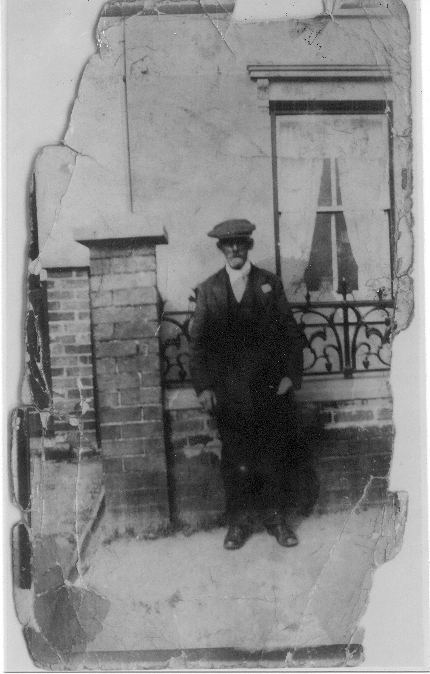
    My great grandfather, Edward Billingham (1874-1950), worked as a miner and lived in Coseley.

    The Black Country is renowned for its contribution to the Industrial Revolution. Pearson observes that “the wealth generated by industry meant people did not leave the region to work elsewhere”. My family lived in the area for centuries. Like many of them, most Black Country inhabitants worked in industrial jobs. My ancestors worked as miners, steel workers, iron puddlers, nail makers, hand loom weavers and brick makers. All of these areas are covered in detail, with the chapters on iron and steel, and industrial diversity. The latter is particularly useful, with details like the 21 out of 43 brickworks in the region being in Sedgley/Kingswinford. As my brick-making ancestors were women, I’m pleased that Pearson recognizes women’s contribution to the industrial revolution and to the growth and culture of the Black Country. He reveals, for example, that in 1883, 16,000 of the 20,000 area’s nail makers were women.

    1-noah-hingley-at-earl-st-wallbrook-home

    My great great grandfather, Noah Hingley (1848-1926), lived in Coseley and worked as an iron puddler.

    Other chapters examine transport, BC off-duty (an assessment of leisure, shops and so on), religion (non-conformism was very popular in the region) and Black Country life. This last chapter covers the remarkable local dialect. I have a particular interest in this as my great uncle Harry Harrison wrote fluently in the dialect, and kept the words and humour alive in regular talks and performances. He was one of the founders of the Black Country Nite Out Show. I can remember as a child finding one of his poetry books on my grandparents’ shelves. I couldn’t understand a word! Thankfully, Pearson provides a guide to some of the most commonly heard words and expressions. Some of them, like “yo’m” (“you’re”), recall the way my grandfather used to speak. To try and get an ear for the dialect, say aloud this line from my great uncle, still proudly displayed on the website of a Droitwich butcher, “Dunn’s mate is really great!”

    As a retired West Midlands Police Inspector, Michael Pearson is unsurprisingly strong in the Crime & Punishment chapter. Despite his non-genealogy background, Pearson’s extensive knowledge of the area is evident. He demonstrates personal insight and local knowledge throughout, from local foods like faggots and “greay pays” (maple peas simmered with bacon and served with bread) to the BC sense of identity (“those born and bred here . . .still see themselves as coming from their village”).

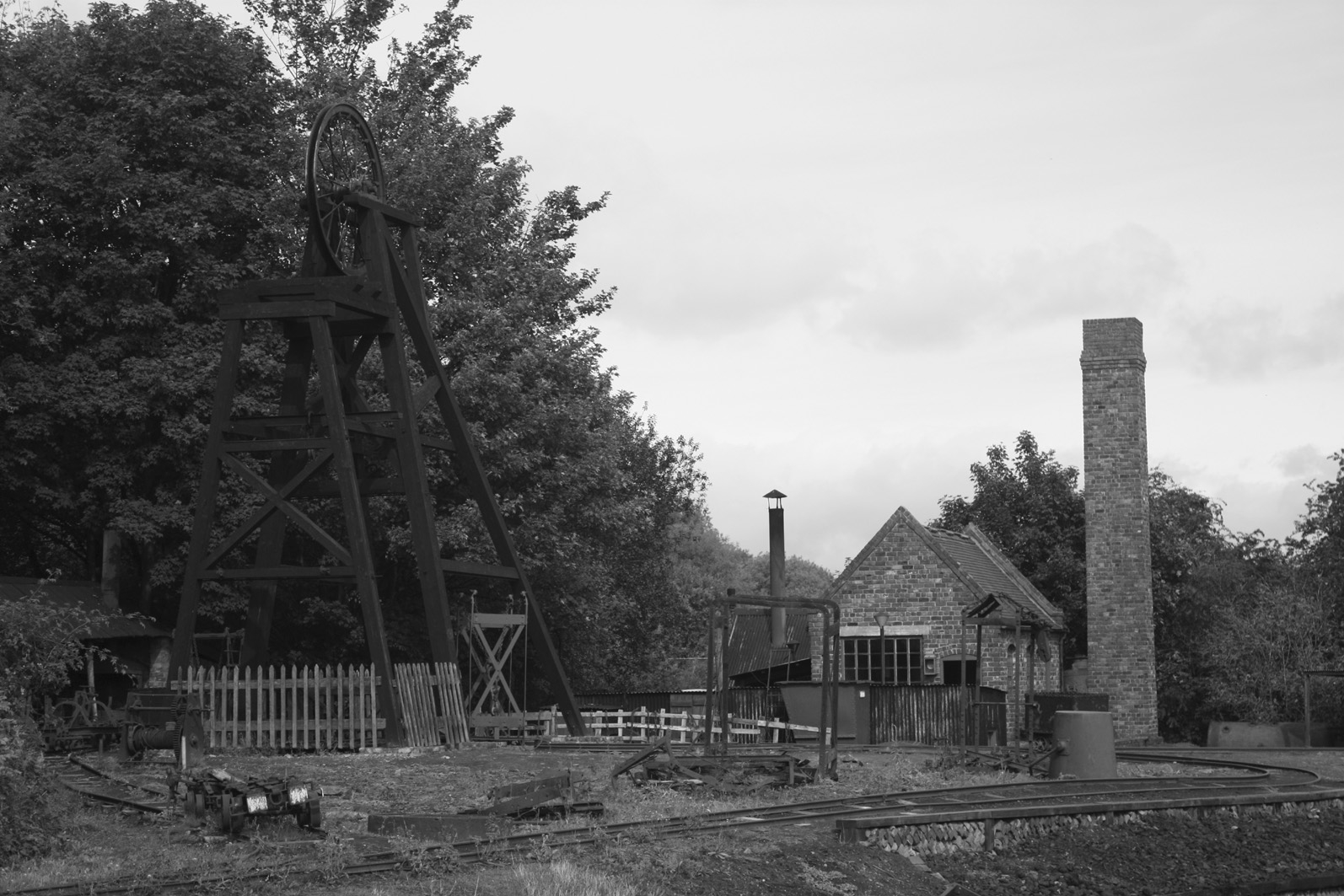
    The book is also well-illustrated, not least by the many images of the Black Country Living Museum, near Dudley, a must-visit for those with ancestors from the region. This open air museum, which opened thirty-four years ago, is spread over a twenty-six acre site with over sixty separate exhibits, such as a chainmaker’s forge and a school. All the historic buildings in the ‘living’ village have been moved brick by brick to be rebuilt exactly as they once stood.

    Racecourse Colliery at the Black Country Living Museum

    racecourse-colliery-at-the-black-country-living-museum

    Summary: this is a book that cannot fail to aid those researching ancestors from the Black Country.

  3. Family History For Kids: New iPhone App

    As a genealogist and mother, I am keen to encourage my two boys, aged 6 and 8, to explore their ancestry in whatever way they can. So far, we have made family visits to exhibitions, living museums, and the former homes of ancestors. We watch history programmes on television, and period films. The 6 year old made a picture family tree chart by chopping up copies (I emphasize COPIES) of old photographs. And the 8 year old consulted census returns for a ‘family homes’ school project. But what they really, really like is playing with gadgets.

    Imagine their excitement when they were let loose on my usually prohibited iPhone to test a new app, Records Their Stories. This app is designed to aid family historians interview and record their relatives’ memories, using a list of over 100 suggested questions covering a range of topics.

    screen-shot-questions

    I gave the boys full control of the process. The 8 year old downloaded the app from iTunes http://itunes.apple.com/us/app/record-their-stories/id483574271?mt=8 He worked out how to select the questions he wanted to ask, and how to flip back to them during recording (press the question mark on the microphone). We found keeping all the questions on the phone easier and tidier than having loose papers everywhere. Once everything was downloaded and they had worked out what to press, the children found the app very easy to use. They could enter their own questions via ‘edit Questions’ but they were both happy with the range offered. Their grandfather also enjoyed the process, with the iPhone adding distraction and levity to the interview.

    screen-shot-recording

    Although the app contains its own editing device to cut out all the pauses, coughs and interruptions that are inevitable when children interview their grandparents, we opted for the professional editing service from the Record Their Stories team. The finished edit included a polished mix of the interview, and numerous additions, such as the soundtrack to their grandfather’s favourite film ‘Singin’ In The Rain’ and a bicycle bell and crashing noise to highlight his most embarrassing moment. Our edited version was just over 2 minutes long, but we’d recorded for at least quarter of an hour. In order to make the most of the professional edit you will need to record for as long as you can with as many relatives as possible.

    When my grandmother was still alive, I tried recording an interview with her using a cheap cassette with sellotape over the holes. We gave up after a while, as she tired easily and became confused. Thinking back, I know I would have recorded more with her if I didn’t have to lug around a radio-cassette player. If I’d owned an iPhone then, I would definitely have used Record Their Stories to interview Grandma whenever I could. Even though I lived with her for 15 years, I’m beginning to forget the way she spoke and her many expressions that I never hear anyone use now – ‘Dolly Daydream’, ‘a five and twenty to six’ . . . My children have already backed up their interview with their grandfather, and plan to record interviews with other older relatives whenever they see them.

    After listening to the edited interview, I asked the 8 year old how he had found the process and what he thought of the App. He replied simply: ‘Awesome!’

    screen-shot-editing

    The Record Their Stories iPhone app is available to download now. Professionally produced bespoke CDs from the RTS team start at £90 per recording.

    Website: www.recordtheirstories.com 

    Demo Video: http://vimeo.com/32479136 

    Fresh Air Production is a team of award-winning radio and audio producers, with clients including The BBC, UKTV, BMW and Channel 4.


Latest From Emma's Blog

A History of the Census Takers: Recording the Nations by Mish J Holman (Pen & Sword, 2026)

Looking beyond the census returns to explore the lives and personalities of the people who created them A History of […]

[Read more]

Book Review and Author Interview: A History of Parish Registers in England and Wales: From the Restoration to Civil Registration by John Wintrip (The Lutterworth Press, 2026)

A History of Parish Registers in England and Wales: From the Restoration to Civil Registration by John Wintrip (The Lutterworth Press, […]

[Read more]

Member of The Society of Authors Member of The Association of Genealogists and Researchers in Archives Graduate of the Institute of Heraldic and Genealogical Studies Canterbury Member of the Society of Genealogists Pharos Tutors