
Book Review and Author Interview: The Splendid Mrs McCheyne and the East London Federation of Suffragettes by Jane McChrystal

The Splendid Mrs McCheyne and the East London Federation of Suffragettes by Jane McChrystal (The Choir Press, 2020)
Independent researcher Jane McChrystal presents an engaging introduction to English suffragette Rosaline McCheyne. A lower-middle class wife and mother living in the early twentieth century with her husband in Bow, east London, Rosaline was one of the most active members of the East End branch of the Women’s Social and Political Union (WSPU). This branch was set up in 1913 by Sylvia Pankhurst. The text moves from an introduction to an extensive interview with Rosaline’s descendant Anne Padfield, then through seven articles exploring different aspects of her experiences as a suffragette, the socio-cultural world of the East End (including her street, Fairfield Road) at the time, her marriage, her domestic experiences, and her activism as a suffragette.
The book gives an insight into the realities of the suffragette experience. It is particularly useful in highlighting lower-class suffragism, which has tended to be overlooked in popular women’s history.
As McChrystal summarises in her afterword, “Her participation in ELFS formed a brief period in her life and has almost been forgotten, but she is an exemplar of the quiet activist, the sort of woman who ends up as an ‘unsung heroine’.”
As such, The Splendid Mrs McCheyne should inspire all family historians to look deeper into the lives of their own women ancestors. Could they, too, have been ‘quiet activists’, contributing in their own small way to the struggle for equality?
What is your background?
With a first degree in Modern Languages, I decided to qualify as a chartered librarian and spent six years in the 1980s working in academic, specialist and public libraries. After a spell as a visiting lecturer in Inner London community colleges, I retrained as a registered psychotherapeutic counsellor and gained many years of practice in primary care and higher education. Teaching and training were also important parts of my experience as a mental health professional. The work was extremely rewarding, but also very demanding and increasingly difficult to sustain when challenging life events piled up one after the other in quick succession, as is so often the case in late middle age.
Giving up paid employment in 2015 freed me to devote my time to a lifelong passion for social history and, in particular, women’s history. The skills I had developed as a Librarian and doing research for a PhD in Psychology seemed to transfer very nicely to my new occupation. I feel extremely lucky to have found out what I wanted to do when I finally grew up and was privileged to have the chance of a third act. I also feel honoured to have been elected as a member of the Royal Historical Society in December 2022.
What drew you to writing about the East London Federation of Suffragettes?
Like most people, I was very familiar with the story of Emmeline Pankhurst’s suffragettes, the Women’s Social and Political Union, and the role they played in the struggle for getting women the vote.
It was not until 2018 that I even became aware of the existence of the East London Federation of Suffragettes, founded by Sylvia Pankhurst from their HQ, the Women’s Hall, on Old Ford Road in Bow just before the First World War.
As part of the centenary celebrations of the passing of the Representation of the People Act, Tamsin Bookey, Heritage Manager at Tower Hamlets Local History Library and Archive, decided to stage a reimagining of the Women’s Hall, accompanied by an exhibition telling the story of ELFS and the East End of London where they campaigned, in tandem with a programme of related events. All this activity needed a cadre of volunteer researchers and I jumped at the chance to become one of them.
After a period of induction and training, we were let loose on a wide variety of secondary and primary sources, including Pankhurst’s collected papers, stored with the International Institute of Social History, Amsterdam, which include the minutes of ELFS’ committee meetings. It was there that I discovered Mrs Rosaline McCheyne, a very active, but rather silent member. Intrigued, I started to delve around into the 1911 census and Kelly’s directories. One day, on my way home from the library, a chance bus diversion took me past the bottom of the street, Fairfield Road, where McCheyne lived. It seemed like a sign and I went hot foot on her trail.
Does East London have personal significance to you?
Most definitely. In 2012 I came to the Isle of Dogs after many years of moving all around North London. At first, the Isle looks like the locus of exclusively modern development, topped off by the towers of Canary Wharf. But you soon become aware of its vast shipping and industrial heritage, like the cranes which still line the edges of the former docks and the remains of the dry dock where Isambard Kingdom Brunel built the SS Great Eastern, partly exposed and partly covered by the flats, where I live.
But this is not my first sojourn in East London. My family lived in Newham, the borough next to Tower Hamlets where I am now, for the first 10 years of my life. I always retained warm, affectionate feelings for its rows and rows of Victorian terraces, my first school, St. Winifreds, and the imposing public library left behind by Andrew Carnegie in Manor Park. I well remember the ruckus my sister, Helen, and I kicked up when my parents announced they would be uprooting us to relocate much further east in Upminster, the very last stop on the District Line, in pursuit of social betterment.
What are the Benefits of Collaborating on a Family History Project?
One of the greatest pleasures I’ve taken in writing and publicising The Splendid Mrs McCheyne has been my collaboration with farmer and family and architectural historian, Anne Padfield.
At around the same time I was beginning my research in Tower Hamlets, Anne was looking for traces of the life of her relative, Rosaline McCheyne in the British Newspaper Archive from her farm in Essex. She’d heard that she’d been a suffragette but there were no shared family memories of her activism. She came across some material about the Women’s Hall Exhibition, which mentioned her relative’s name, got in touch with the library and was sent in my direction.
I conducted a long interview with Anne where we pooled our knowledge and realised we were a perfect match. Anne filled out the story of Rosaline’s life before and after her time as a suffragette, told me all about her children and husband and provided me with fascinating glimpses of the kind of person she was. I was able to tell Anne about her activism and fill out the social and political background.
We work together to this day. Our most recent outing was a presentation about Rosaline and our collaboration with the Institute of Historical Research at Senate House.
What’s next for you? Any more books?
Well, there’s a lot coming down the pike! In the long term, I’d like to produce a substantial piece about progressive Edwardians, like HG Wells, and their obsession with the Eugenicist movement, based on research carried out at LSE’s library.
In 2021 I published “No Girl Left Behind” in the October issue of History Today, a piece about girls, women and menstruation between 1870-1940, based on research I conducted at the Wellcome Collection, another project undertaken as part of the programme of events staged for the Women’s Hall Exhibition, which became “Iron in her Soul”. I have continued to develop this material with particular emphasis on the malign influence of the medical profession on the way girls and women lived their lives during and between their periods and how radically things changed when women started to qualify as doctors. I’d love to turn this into another event with an accompanying monograph.
Later this year I intend to travel to Chawton House in Hampshire to look at Mary Astell’s feminist manifesto “A Serious Proposal to the Ladies for the Advancement of their True and Greatest Interest”, in the Library of Early Women’s History.
Mary Astell (1666-1731), sometimes referred to as England’s first feminist was a Lockean philosopher and a member of a group of learned and philanthropic women in Chelsea, where she founded a free school for girls.
I discovered the manifesto in the catalogue of the collection of UCL Library, where I participated in Liberating the Collection last summer under the supervision of Jo Baines, Academic Liaison Librarian and Archivist, once again as a member of a team of volunteers. I shall be able to hold a copy of it in my hands at last and hope to find inspiration for another exciting project to get going in 2023.
There is more, but that’s probably enough for now!
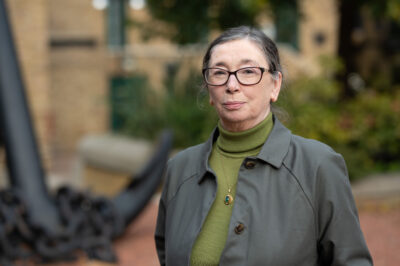
Jane McChrystal is an independent researcher, who writes for an audience with wide cultural interests and an appreciation of intelligent, well-informed commentary on social history. Her special interests are women’s history and the lives of the labouring classes in the East End of London.


